A car repair bill hits on Tuesday. Rent is due Friday. You need cash fast, and the last thing you want is to spend hours sorting through loan jargon. If you are comparing secured vs unsecured loans, the big question is simple: do you need to put up collateral to borrow money, or not?
That difference affects almost everything – approval odds, loan amount, speed, rates, and what happens if you cannot repay on time. For borrowers dealing with urgent expenses, knowing where each option fits can save time and help you avoid the wrong kind of debt.
Secured vs unsecured loans: the core difference
A secured loan is backed by collateral. That collateral could be a car, a savings account, or another asset the lender can claim if you default. Because the lender has that extra protection, secured loans may be easier to qualify for in some cases, especially if your credit is limited or damaged.
An unsecured loan does not require collateral. Approval is usually based on your credit profile, income, banking history, debt levels, and other risk factors. Personal loans, installment loans, and many online small-dollar loans are often unsecured.
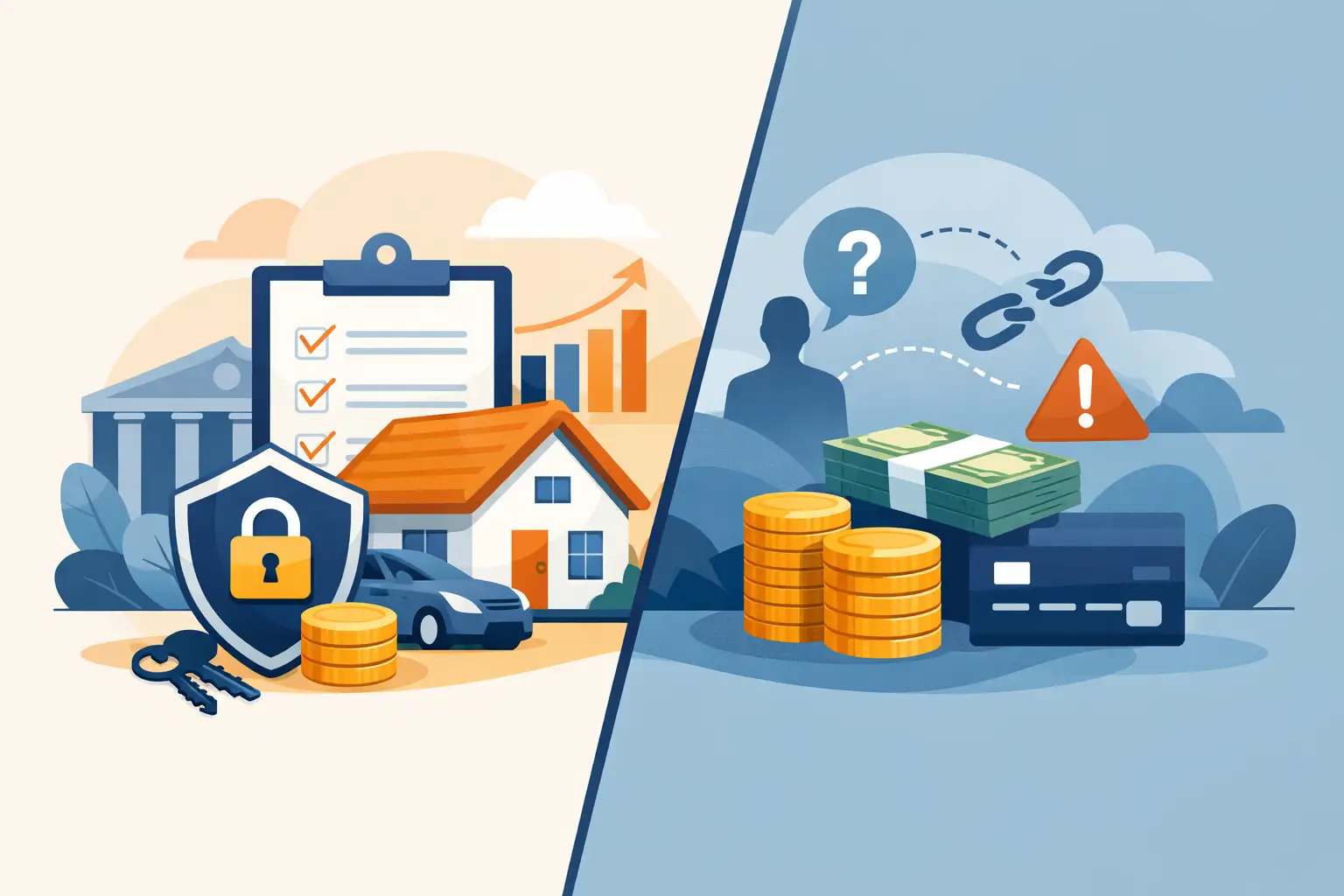
This sounds straightforward, but the trade-off matters. Secured borrowing can improve access to larger amounts or lower rates, but it puts your property on the line. Unsecured borrowing usually moves faster and involves less risk to your assets, but rates may be higher and approval can be tighter depending on the lender.
How secured loans work
With a secured loan, the lender places value on something you own. If you stop making payments, the lender may have the legal right to take that asset and sell it to recover losses.
Common examples include auto loans, mortgages, secured credit cards, title loans, and some share-secured loans from banks or credit unions. In each case, the asset reduces lender risk. That is why secured loans often come with lower interest rates than unsecured options for borrowers with similar credit.
Still, lower cost does not always mean lower danger. If you use your vehicle or another necessary asset as collateral, falling behind can create a bigger problem than the one you were trying to solve. That risk is especially serious when the loan is for a short-term cash emergency rather than a planned purchase.
For a borrower with poor credit and a paid-off car, a secured loan may look like the easiest path to approval. Sometimes it is. But if losing that car would affect your job, child care, or daily life, the true cost may be much higher than the APR alone suggests.
How unsecured loans work
Unsecured loans rely more heavily on your overall borrower profile than on property. The lender reviews factors like your income, employment, recent deposits, debt obligations, and credit history. Some lenders serve prime borrowers. Others work with bad-credit or second-chance applicants and use broader criteria.
This is one reason unsecured online loans are popular for urgent expenses. The process is usually faster, the paperwork is lighter, and there is no asset appraisal or lien filing. Many borrowers care less about getting the absolute lowest rate and more about getting a quick decision and access to funds when time matters.
That convenience has a cost. Because the lender is taking more risk, unsecured loans can come with higher rates, lower borrowing limits, or shorter repayment terms. If your credit is weak, you may still qualify, but the offer may be more expensive than a secured option.
For many people, though, keeping their car, savings, or other assets out of the deal is worth it. If your main goal is covering a short-term gap without risking property, an unsecured loan may be the better fit.
Which is easier to get approved for?
There is no one-size-fits-all answer. In theory, secured loans are easier to approve because collateral lowers lender risk. In real life, it depends on the asset, the lender, and your situation.
If you have poor credit but own something valuable, a secured loan may open doors that would otherwise stay closed. But not every borrower has usable collateral, and not every lender wants the same type of asset. A lender may also still check income and repayment ability, so collateral alone does not guarantee approval.
Unsecured lenders vary widely. Some have strict credit cutoffs. Others are built for consumers with low scores, thin files, or past financial problems. That makes unsecured borrowing more accessible than many people expect, especially in the small-loan space.
If you need a few hundred to a few thousand dollars quickly, unsecured options may be easier to pursue simply because the process is faster and requires less documentation. Platforms like Yup Loans focus on connecting borrowers with lenders offering unsecured personal loan options, which can make sense when speed matters more than pledging an asset.
Rates, fees, and total cost
The biggest mistake borrowers make is looking only at the monthly payment. A low payment can hide a long term or high total repayment amount.
Secured loans often have lower interest rates because the lender has collateral as backup. That can reduce total cost over time. But some secured products, especially those aimed at people in urgent need, can still be expensive. A title loan is the clearest example. It is secured, but that does not automatically make it affordable.
Unsecured loans may carry higher APRs, particularly for bad-credit borrowers. Even so, they can still be the safer choice if the alternative is putting a vehicle or another essential asset at risk. The right comparison is not just secured versus unsecured. It is total repayment, payment schedule, fees, and what you stand to lose if things go wrong.
Before you accept any offer, check the APR, finance charges, late fees, and whether the payment fits your budget on your actual payday schedule. Fast funding helps in an emergency, but repayment still needs to work after the emergency passes.
When a secured loan may make sense
A secured loan may fit if you need a larger amount, have valuable collateral, and want a lower rate than unsecured financing can offer. It can also make sense if your credit profile limits your options but your income is steady and the loan purpose is planned and necessary.
That said, the asset should be something you can truly afford to put at risk. Using collateral for debt consolidation or a major purchase may be one thing. Using it to cover groceries, utilities, or a short-term bill gap is another. If the loan solves a temporary problem but creates a repossession risk, it may not be the right move.
When an unsecured loan may be the better option
An unsecured loan often makes more sense when you need money quickly, do not want to risk property, or are looking for a smaller personal loan for an immediate expense. It can also be the better route if you do not own collateral or you simply want a more straightforward online application process.
For emergency borrowing, speed and simplicity matter. If you can request funds online, get a decision quickly, and avoid tying your car or savings to the loan, that can be a real advantage. The offer still needs to be affordable, but the structure is often better aligned with short-term urgent needs.
This is especially true for borrowers who have been turned down by traditional banks. Unsecured online lenders and lending networks may review applications more flexibly, which can improve access even when credit is not perfect.
Questions to ask before you choose
Start with the real reason you need the money. If this is an urgent expense and you only need a modest amount, an unsecured loan may be the cleaner option. If you need a larger amount and have stable finances, a secured loan may be worth considering.
Then ask what happens if repayment gets hard. With an unsecured loan, you may face fees, collections, and credit damage. With a secured loan, you could lose the asset. That difference matters more than many borrowers realize at the start.
Finally, look at timing. If you need funds today or as soon as possible, unsecured online options usually have the edge. Secured loans can take longer because the lender may need to verify and document the collateral.
The best loan is not always the one with the lowest advertised rate. It is the one that solves the problem in front of you without creating a worse one a month from now. If you need fast cash, keep your focus on affordability, speed, and risk – and choose the option you can repay with confidence.