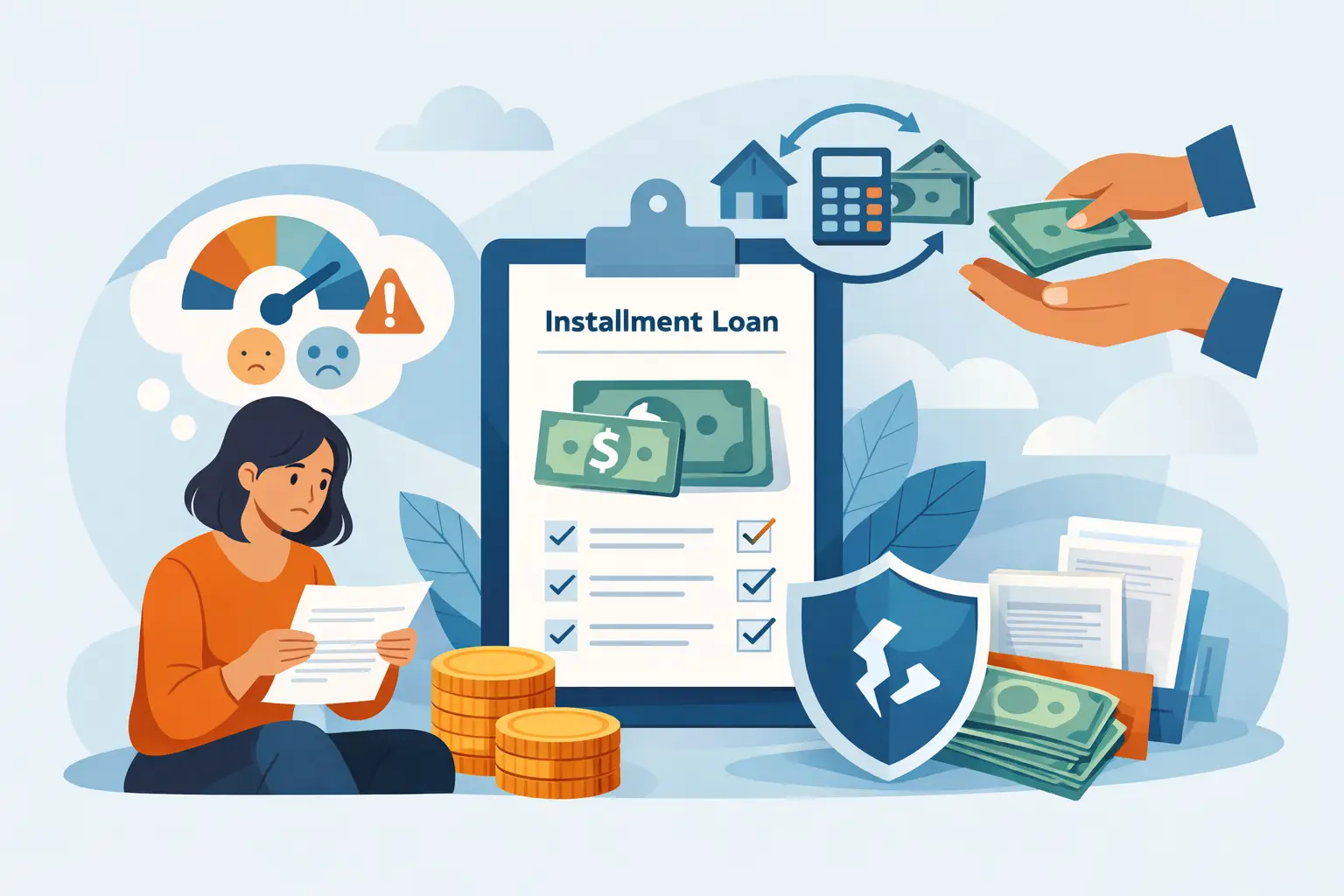
A $600 car repair, an overdue utility bill, or an unexpected medical copay can put you in a tight spot fast. If your credit score is low, you may assume borrowing is off the table. The good news is that learning how to qualify for a bad credit installment loan is less about having perfect credit and more about showing a lender you can handle the payments.
Bad credit installment loans can provide a set amount of money with scheduled payments over time. Unlike a loan that requires one large payoff on your next payday, installment payments are spread across a stated term. That can make a necessary expense easier to budget for, but only if the payment fits your income and you understand the full cost before accepting an offer.
What lenders look at besides your credit score
A low score can affect your available options, but it is rarely the only factor. Many lenders serving borrowers with fair, poor, or limited credit look at your current financial situation as well as your credit history. They want to know whether you have the ability to repay a new loan today.
Your income is a major part of the decision. You may qualify with wages from a job, self-employment income, benefits, retirement income, or other verifiable sources, depending on the lender’s rules. Consistent income generally matters more than earning a specific amount. Lenders also review how often you are paid and whether the requested payment appears manageable based on your income.
Your banking history may matter, too. Some lenders require an active checking account in your name for depositing funds and collecting scheduled payments. A valid email address, phone number, government-issued ID, and proof of age are also common requirements. You must be at least 18 and a US resident, though requirements can vary by lender and state.
Finally, lenders may consider your existing obligations. If a large share of your paycheck already goes toward rent, credit cards, auto payments, or other debt, taking on another payment could be harder to approve. Asking for only what you need can help keep the requested payment more realistic.
How to qualify for a bad credit installment loan
Start by looking at your actual budget, not just the amount of cash you need this week. Write down your net income, essential expenses, current debt payments, and the amount you could comfortably pay each pay period. A loan can solve an immediate gap, but a payment that strains next month’s budget can create a new problem.
Next, gather your information before you apply. Having accurate details ready can make an online request faster and reduce avoidable errors. Be prepared to provide your name, address, date of birth, contact information, employment details, income information, and bank account details if requested. If the lender asks for documentation, respond promptly and submit only accurate information.
Then request an amount that matches the expense. If you need $500 for a repair, applying for $3,000 simply because it is available can raise your payment and total borrowing cost. Small-dollar personal loan options may range from $250 to $3,000, with repayment terms often running from several months to a few years. The amount and term you receive depend on your application, the lender, and state rules.
Use consistent information across your application. A different address on your ID, bank account, and application can delay verification. The same goes for estimated income that does not match your records. Honest answers are the best way to get an offer you can actually qualify for and repay.
Steps that may improve your chances
You do not need to wait years for a perfect score before exploring your options. A few practical moves may strengthen an application right now.
First, check your credit report for errors. Incorrect late payments, accounts that do not belong to you, or outdated balances can hurt your score. You may be able to dispute inaccurate information with the credit reporting agency. This will not create an instant score jump in every case, but correcting mistakes is worth the effort.
Second, avoid submitting applications everywhere at once. Multiple applications in a short period can make a stressed financial situation look worse, depending on how lenders review credit. Instead, focus on legitimate providers or loan connection services that clearly explain their process and disclosures.
Third, reduce preventable banking issues. If possible, avoid repeated overdrafts and make sure your account is active and able to receive electronic deposits. For lenders that use bank-account information as part of their review, a stable account can support a cleaner application.
If you have a co-borrower option through a particular lender, it may help in some situations, but it is a serious commitment. A co-borrower becomes responsible for the loan if you cannot pay. Do not ask someone to take on that risk unless both of you understand the terms and have a clear repayment plan.
Compare the offer, not just the approval message
Fast approval can feel like a relief when money is tight. Still, an approval is not automatically a good deal. Before accepting any installment loan, read the loan agreement from beginning to end.
Pay close attention to the annual percentage rate, or APR. The APR reflects interest and certain fees expressed as a yearly cost, making it useful when comparing loans. Bad credit borrowers may receive higher APRs because lenders view the loan as a greater risk. A longer repayment term can lower each payment, but it may also mean paying more interest overall.
Review the payment schedule, total of payments, late-payment consequences, and any optional products included in the agreement. Ask whether there is a prepayment penalty if you want to pay the loan off early. Make sure you know the exact due date and whether payments will be automatically withdrawn from your account.
Be cautious of any company that guarantees approval before reviewing your information, demands payment before funding, pressures you to act without showing terms, or asks you to send money through gift cards, cryptocurrency, or wire transfers. Legitimate lenders disclose key costs and give you a chance to review the agreement before you sign.
A quick online request can help you see available options
When time matters, an online loan connection service can make it easier to request offers without visiting multiple locations. Yup Loans connects eligible consumers with lending partners that may offer unsecured personal loans for a range of credit profiles. Completing a short request may produce a decision quickly, but submitting a request does not guarantee approval, a specific loan amount, or a particular rate.
If you receive an offer, the lender’s terms control. Read them carefully, verify that the payment works with your budget, and accept only if the loan solves a real need without putting essential bills at risk. Funding timing also varies by lender, verification requirements, and your bank’s processing schedule.
When an installment loan may not be the right move
An installment loan can be useful for a necessary, one-time expense when you have a clear way to make each payment. It may be less helpful if you are using new borrowing to cover a recurring shortfall every month. In that case, adding another bill could make the cycle harder to break.
Consider alternatives when available. A payment plan with a medical provider, a utility hardship program, a due-date extension, community assistance, or help from a trusted family member may cost less than borrowing. If you do borrow, keep the amount focused on the urgent expense and make a plan to pay it down early if your loan terms allow.
A bad credit score does not define your options forever. Apply with accurate information, borrow only what your budget can support, and treat every offer as a decision worth reviewing carefully. The right next step is the one that gets you through the immediate expense without making the weeks ahead harder.