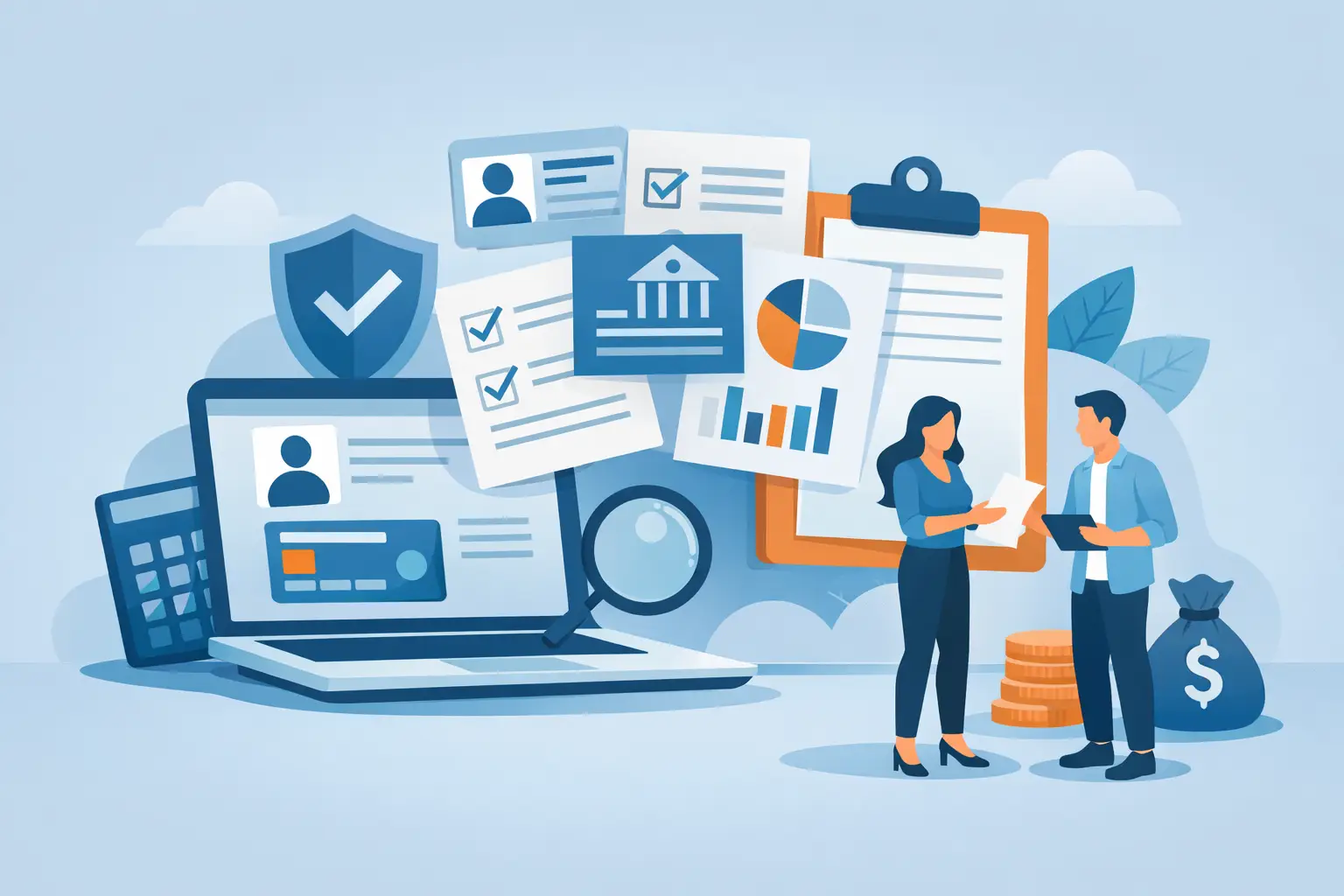
A car repair, overdue utility bill, or medical copay rarely waits for payday. If you are asking what documents do online lenders need, the good news is that the list is often shorter than a traditional bank loan application. Many online lenders use a quick digital review, but they still need enough information to confirm who you are, review your ability to repay, and send funds to the right place.
Having your details ready before you start can save time when every hour matters. Requirements vary by lender, loan amount, state, credit profile, and the offer you select. A lending marketplace can connect you with potential lenders, but each lender makes its own approval decision and may request additional documentation.
What Documents Do Online Lenders Need Most Often?
Most personal loan requests begin with basic personal, income, and banking information. You may be able to enter much of it directly into an online form instead of uploading paperwork right away. If a lender needs verification, you could be asked to provide clear photos, screenshots, or digital copies.
Government-issued photo ID
Lenders need to verify your identity and confirm that you meet the minimum age requirement. A valid driver’s license, state ID card, passport, or other government-issued photo identification may be accepted. Your name, date of birth, and address should match the information on your application whenever possible.
If you recently moved or changed your name, be prepared for extra questions. Small inconsistencies can delay verification, even when your application information is accurate.
Social Security number or ITIN
Many lenders request your Social Security number to verify identity, check eligibility, and review credit information when applicable. Some may accept an Individual Taxpayer Identification Number instead. You generally should not send this information through email or text. Enter it only through a secure application page from a company you recognize.
A credit check may be soft or hard depending on the lender and stage of the process. Read the lender’s disclosures before accepting an offer so you understand how the inquiry may work.
Proof of income
Income helps a lender estimate whether the monthly payment fits your budget. Pay stubs are common proof for employees, especially recent stubs that show your name, employer, pay date, and year-to-date earnings. You may also be asked for bank statements showing direct deposits.
Income does not always have to come from a full-time job. Depending on the lender, other sources may count, including part-time work, self-employment, retirement benefits, Social Security benefits, disability benefits, alimony, child support, or qualifying government benefits. The lender may ask for documents that support the income you list.
Self-employed applicants may need recent bank statements, tax returns, or a profit-and-loss statement. This can mean a little more review time, but self-employment does not automatically prevent you from requesting a loan.
Active checking account details
For online loans, an active personal checking account is commonly required. Lenders use it to deposit approved funds and, in many cases, collect scheduled payments under the terms of your agreement. You may need to provide your bank name, routing number, account number, and the length of time the account has been open.
A recent bank statement may be requested to confirm account ownership and income deposits. Avoid submitting a statement with missing pages, altered information, or a name that does not match your application. Those issues can trigger a verification hold.
Phone number, email, and current address
These are simple details, but they matter. Lenders may use your phone number or email to send a verification code, request a document, disclose final terms, or confirm your acceptance. Use contact information you can access immediately.
Your current street address may also need to be verified. If your ID has an old address, a utility bill, lease agreement, insurance statement, or other recent proof of residence may help. Not every lender requests this, but it is smart to have it available.
Documents That May Be Needed in Certain Situations
Not every borrower has the same financial picture. Lenders may ask for more documentation when information needs clarification, when the requested amount is higher, or when their fraud-prevention system identifies a mismatch.
If you receive benefits, you may need an award letter or benefit statement. If you recently started a new job, an offer letter or recent pay stub may help verify your employment. If you are using a joint application where available, both applicants usually need to provide their own identity and income details.
Some lenders may ask about your monthly housing payment, other debt payments, or employment history. These are not always documents, but answer carefully. Your income, expenses, and requested loan amount should make sense together.
How to Get Your Documents Ready Faster
A fast application starts before you click submit. Gather your ID, income records, and bank details in one place. Make sure document photos are bright, readable, and show all four corners when requested. Blurry images and cropped screenshots are common reasons a lender asks for a resubmission.
Use the same legal name, address, and income information across your application and documents. If you are paid by direct deposit, recent bank statements and pay stubs can often provide the details a lender needs. If your income changes from month to month, use accurate averages rather than guessing high.
You should also review your checking account before applying. Confirm that it is open, active, and able to receive ACH deposits. Prepaid cards, savings accounts, and accounts belonging to someone else may not qualify with every lender.
What You Usually Do Not Need
Online personal loans are often unsecured, meaning you usually do not have to put up a car, house, or other property as collateral. You generally will not need vehicle titles, home appraisals, or piles of business records for a small personal loan request.
That said, fewer documents does not mean no review. Lenders still evaluate eligibility using the information you provide, their underwriting criteria, and applicable laws. A quick decision is possible, but it is not guaranteed, and approval is never automatic.
Protect Your Information While Applying Online
Urgent expenses can make anyone want to move fast. Move fast, but do not skip basic safety checks. Work only with legitimate companies that provide clear contact information, loan terms, privacy details, and disclosures. Be cautious if someone guarantees approval before reviewing your information, demands an upfront fee before funding, or asks you to pay through gift cards, cryptocurrency, or wire transfer.
Before you accept any loan, review the loan amount, annual percentage rate, finance charges, payment schedule, total repayment cost, and consequences of late or missed payments. A loan can help cover a short-term gap, but the payment must fit your next paychecks and regular bills.
For many borrowers, the best next step is simple: get your ID, proof of income, and checking account details ready, then request only the amount you can reasonably repay. When the right offer appears, being prepared can help you respond with confidence instead of scrambling for paperwork.