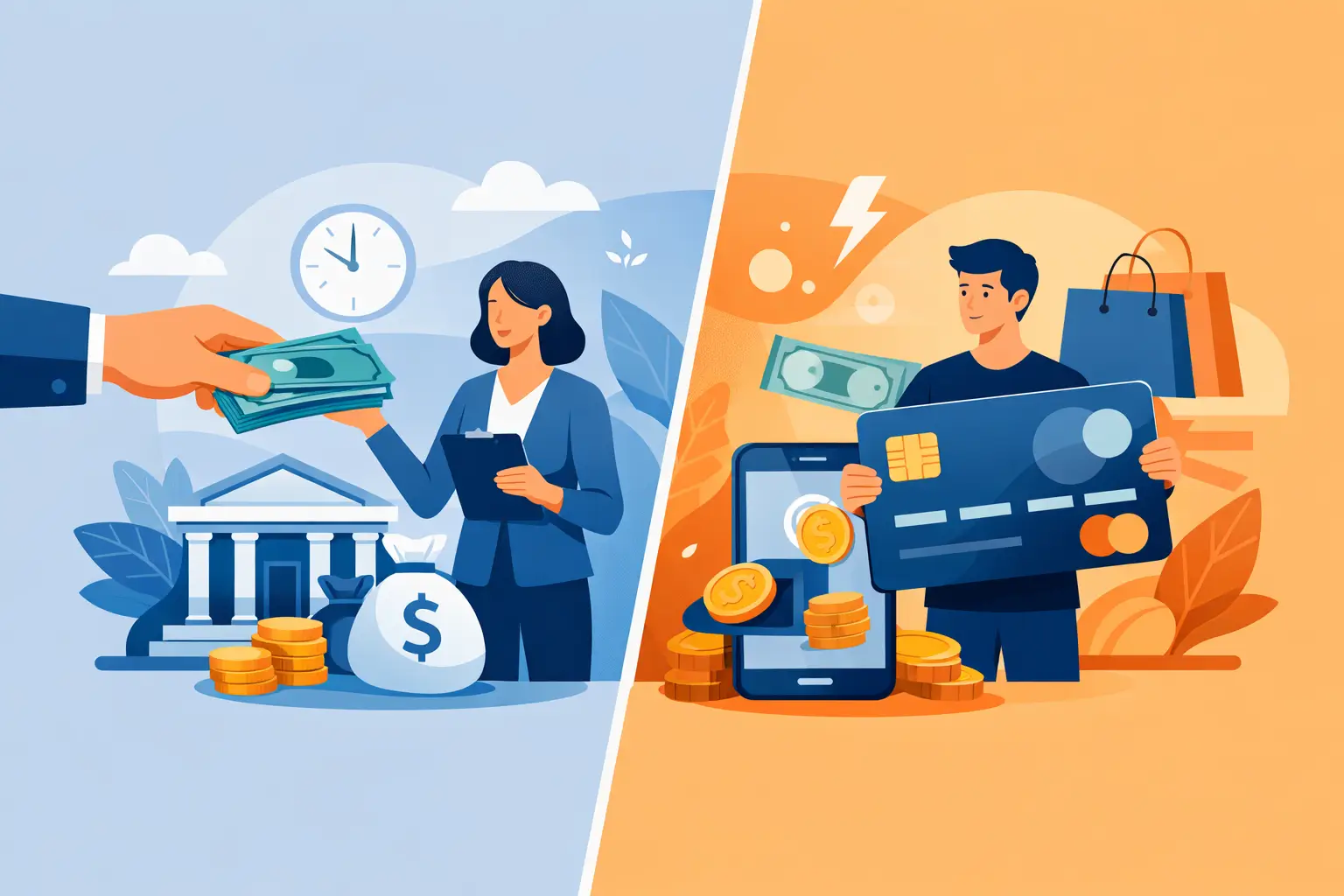
A car repair bill, medical copay, or overdue utility payment can force a quick decision: personal loan versus credit card. Both can help cover an urgent expense, but they work very differently once the bill arrives. The best choice depends on how much you need, how quickly you can repay it, the rates you qualify for, and whether you need a fixed payment you can plan around.
A credit card can be useful when you need to pay a merchant right away. A personal loan may make more sense when you need cash deposited into your bank account, want a set repayment schedule, or need to spread a larger expense across several months. Before you borrow, look past the approval message and focus on the total cost and payment you will be responsible for.
Personal Loan Versus Credit Card: The Core Difference
A credit card gives you a revolving line of credit. You can use it, pay it down, and use it again up to your available credit limit. Your minimum payment can change from month to month, and any unpaid balance may continue to accrue interest.
A personal loan is usually installment credit. If approved, you receive a specific loan amount and repay it through scheduled payments over a fixed term. With many personal loans, the payment amount and payoff date are known before you accept the loan offer.
That distinction matters when money is tight. A revolving card balance can be convenient, but making only minimum payments may keep you in debt longer than expected. A fixed-term loan can give you a clearer finish line, although you still need to make every scheduled payment on time.
When a Credit Card May Be the Better Move
A credit card may be a practical option when the expense is small, the merchant accepts cards, and you can realistically pay off the balance quickly. If you already have available credit, you may not need to submit a new application or wait for funds to arrive.
Cards can also offer a promotional 0% introductory APR to borrowers who qualify. That can be valuable for a planned purchase, but read the offer carefully. Promotional periods end, and a remaining balance may begin accruing interest at the regular purchase APR. Missing a payment can also lead to fees, penalty pricing, or the loss of a promotional rate depending on the card agreement.
A credit card is often less useful when you need cash rather than a purchase. Cash advances can come with upfront fees, a separate and often higher APR, and interest that starts immediately. Using a card for a cash advance is not the same as paying a merchant with your card.
When a Personal Loan Can Make More Sense
A personal loan can be a better fit when you know the amount you need and want a payment schedule that does not change. For example, a $1,200 transmission repair, emergency dental work, or several past-due bills may be easier to manage through set payments over a defined term than through an open-ended card balance.
Personal loans may also be useful if your credit card limit is too low for the expense or you do not have a card available. An online loan request can connect eligible borrowers with lenders that offer small-dollar loan options, including some options for people with less-than-perfect credit. Approval is never guaranteed, and the loan terms you receive depend on the lender’s review of your application.
Speed matters in an emergency, but do not let speed replace comparison. Some lenders can make a decision quickly and may deposit funds as soon as the same or next business day after approval and acceptance. Funding times vary by lender, bank, and the time you complete your agreement.
Compare the Numbers Before You Accept
The monthly payment alone does not tell you whether an offer is affordable. A lower payment can simply mean a longer repayment term, which may increase the total amount repaid. Compare the full offer, including the APR, finance charge, fees, payment amount, term length, and total repayment amount.
APR is especially useful because it reflects the annual cost of borrowing and may include certain fees. Credit card APRs are commonly variable, meaning they can change with market conditions. A personal loan may have a fixed APR and fixed payment, but terms vary widely by lender and borrower qualifications.
Say you need $800 for an urgent repair. Charging it to a card may be less expensive if you can pay the full $800 within a month or two and avoid carrying a balance. If repayment will take longer, a personal loan with a clear payoff schedule could be easier to budget for. That does not automatically mean the loan costs less. You still need to compare the actual APR and fees offered to you against the card rate you would pay.
Be careful with offers that focus only on the amount of cash you can receive. Ask yourself whether the payment fits alongside rent, food, insurance, transportation, and other essentials. Borrow only what you need for the expense at hand.
How Your Credit Profile Can Affect Your Options
Good credit may open the door to lower-rate cards and personal loans. But many people looking for emergency funds do not have perfect credit, a long credit history, or unused credit available. That does not mean every option will be out of reach. It does mean the offers may carry higher costs and require closer review.
Lenders can consider more than a credit score. Income, employment, current debts, banking history, requested amount, and state requirements may all affect eligibility and terms. A lender may also verify information before final approval.
If you have a low credit score, avoid assuming a credit card is automatically cheaper because it feels familiar. A high card APR, cash advance charge, or maxed-out balance can become costly fast. On the other hand, do not assume a personal loan is the answer simply because it offers cash quickly. Review the repayment obligation before agreeing to anything.
Avoid Turning a Short-Term Problem Into Long-Term Debt
Whether you choose a card or a loan, the repayment plan matters more than the application process. Set a reminder for every due date and keep enough room in your budget for the payment. Late payments can lead to fees, added interest, account problems, and potential credit damage.
Try not to use new borrowing to cover a payment on existing borrowing unless you have carefully reviewed the cost and have a realistic plan to stop the cycle. If the expense can wait, saving for it or asking the provider about a payment arrangement may be less expensive than borrowing. Medical offices, utility companies, and repair shops sometimes offer payment options that are worth asking about.
For immediate, necessary expenses, Yup Loans can help consumers request loan options online through its lender network. Take time to read any loan agreement presented to you, including the APR, payment dates, lender information, and total amount due. A quick decision is helpful only when the terms work for your budget.
Choose Based on Your Repayment Plan
The personal loan versus credit card decision is not about which product is always better. It is about matching the borrowing method to the expense and your ability to repay it. A card can work well for a small purchase you can clear fast. A personal loan may provide more structure when you need a specific amount of cash and a set schedule.
Before you move forward, write down the amount you need, the payment you can afford each month, and the date you expect to be fully repaid. That simple check can help you choose funding that solves the immediate problem without creating a bigger one next month.