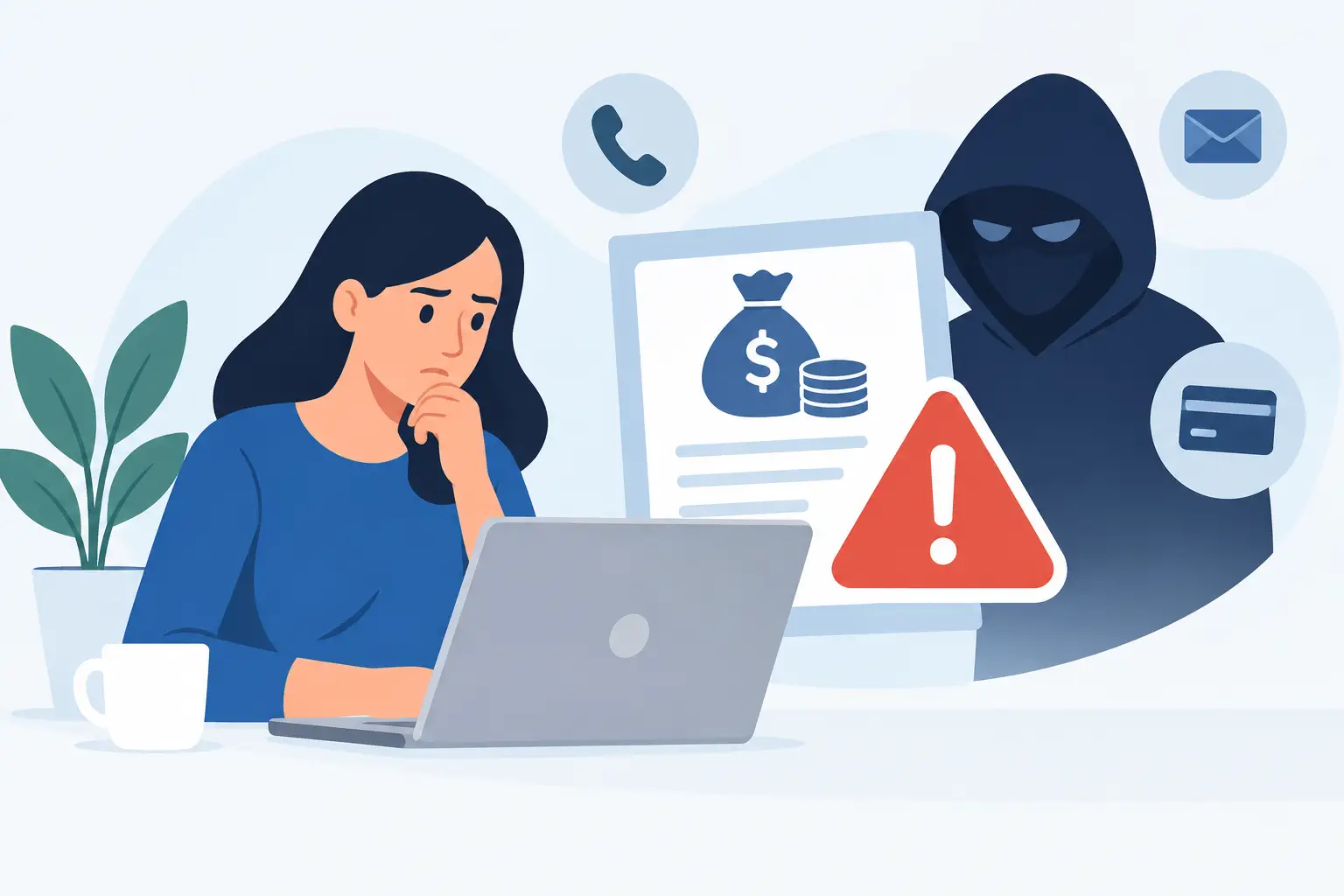
A car repair bill, overdue utility notice, or medical expense can make fast cash feel non-negotiable. That pressure is exactly what loan scams count on. A scammer may promise guaranteed approval, instant funding, or bad-credit loans with no questions asked, then use the offer to take your money or steal your information.
Real lenders and loan marketplaces can offer a fast online process. But speed should never mean skipping basic checks. Knowing what to look for can help you request funds with more confidence and avoid turning a short-term money problem into a much bigger one.
How Loan Scams Usually Work
Most loan scams begin with an offer that sounds unusually easy. You might see an ad on social media, receive a text, get an unexpected call, or find a website that looks polished at first glance. The person contacting you may use a lender name you recognize or create a name that sounds very similar to a real company.
The scammer wants one of two things: an upfront payment or sensitive personal information. Sometimes they want both. They may say a fee is needed to release the loan, improve your credit, insure the deposit, or cover taxes. After you send money, the promised loan never arrives. If you share banking credentials, a Social Security number, or account login codes, the damage can continue long after the fake offer disappears.
A legitimate lender may charge fees in some cases, including an origination fee. The difference is disclosure and timing. Legitimate fees are clearly shown in the loan terms, along with the amount financed, payment schedule, APR, and total cost. A lender should not demand that you pay money through a gift card, wire transfer, cryptocurrency, or person-to-person payment app before you receive a loan.
9 Signs of Loan Scams
1. You are guaranteed approval
No legitimate lender can honestly guarantee every applicant will be approved before reviewing basic information. Lenders evaluate income, requested amount, state availability, identity, and other factors. Some lenders work with borrowers across a broad range of credit profiles, but “guaranteed” is still a major warning sign.
2. You must pay before the funds are released
This is one of the clearest red flags. A scammer may call it a processing fee, deposit fee, collateral payment, insurance charge, or credit repair fee. They may even claim the payment is refundable. Do not send money to receive money.
3. The payment method is hard to reverse
Gift cards, cryptocurrency, wire transfers, cash deposits, and payment apps sent to an individual are common scammer requests. These payment methods can be difficult or impossible to recover once completed. A real business should not pressure you to pay through an unusual method to unlock your loan.
4. The offer arrives out of nowhere
An unsolicited text or phone call is not automatically fraud, but it deserves extra caution. Be especially careful if the caller says you have already been approved for a loan you never requested. Do not use the phone number or link provided in an unexpected message to verify the company. Find the business independently before responding.
5. The lender creates urgency
Scammers want you to act before you have time to think. They may say the offer expires in 10 minutes, claim your funds are waiting, or threaten that a fee will increase if you do not pay now. A real loan decision can be time-sensitive, but you should still have the chance to read the terms and ask questions.
6. The website or messages look off
Watch for misspellings, awkward grammar, generic email addresses, copied logos, or a website address that is slightly different from the company name. A secure-looking website alone does not prove a business is legitimate. Scammers can create convincing pages, including pages that copy a real lender’s branding.
7. They ask for your online banking password or a one-time code
A lender may ask for bank information to deposit approved funds or verify income, depending on its process. It should not need your online banking password, debit card PIN, or security code sent by text to access your account. Never share one-time passcodes. Those codes can allow someone to sign in, reset account access, or authorize transactions.
8. There are no clear loan terms
Before accepting a loan, you should be able to see key details: the loan amount, APR, repayment term, payment amount and frequency, fees, and total repayment cost. If someone refuses to provide written terms, avoids direct answers, or keeps changing the numbers, walk away.
9. You cannot verify the business
A legitimate lender or loan connection service should provide clear business information and disclosures. Search for the company name with words such as “complaint” or “scam,” and compare contact details across independent sources. You can also check whether the lender is licensed where required in your state. Some lending rules vary by state, so availability and terms can differ.
How to Check a Loan Offer Before You Apply
Start by slowing the process down. An urgent expense may be real, but you do not need to accept the first message that reaches your phone. Go directly to a company’s official website instead of clicking an ad, text, or email link. If someone calls claiming to represent a lender, end the call and use the contact information listed on the company’s official site to call back.
Read the disclosures before you sign anything. Focus on the APR, not just the payment amount. A lower payment can look manageable because the term is longer, but a longer repayment period may increase the total amount you repay. For small-dollar loans, compare both the due date and the full cost so the payment fits your budget.
Be honest when you apply. Using accurate income, employment, and banking information helps lenders make a real decision. It also helps you avoid offers built on promises that cannot be supported once verification begins.
If you use a loan marketplace, understand its role. A marketplace such as Yup Loans may connect applicants with participating lenders or financial offers rather than directly making the loan. Review the lender’s final offer carefully before accepting it. Getting connected quickly can be useful, but the final terms are what determine whether the loan works for your situation.
What to Do If You Think You Found a Scam
Stop communicating with the person and do not send additional money or documents. Save screenshots, emails, text messages, payment receipts, and the website address. Those records can help your bank, payment provider, and consumer protection agencies review what happened.
If you shared bank information, contact your bank immediately. Ask about securing the account, monitoring unauthorized activity, changing online banking credentials, and replacing cards if needed. If you gave out your Social Security number or other identity details, consider placing a fraud alert or credit freeze with the major credit bureaus.
If you already sent money, report the transaction as quickly as possible. Recovery is not guaranteed, especially with gift cards, wire transfers, or cryptocurrency, but fast action may improve the chance of stopping a pending transfer. Report the scam to the appropriate federal and state consumer protection authorities as well.
The fastest offer is not always the best one. Take a few extra minutes to verify who is behind it, read every loan term, and keep control of your personal information. A real lender will give you facts to review, not pressure you to pay first.