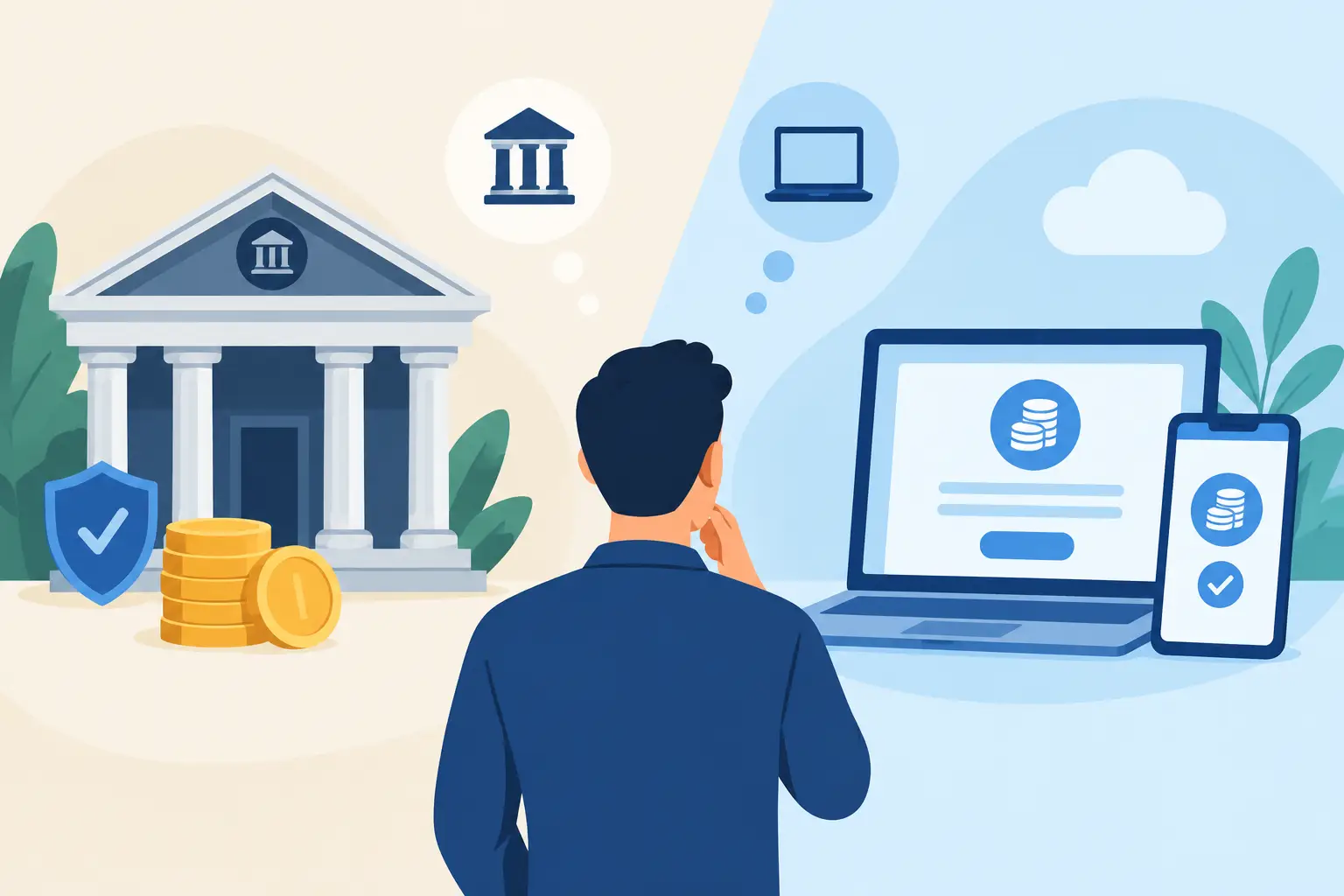
A car repair bill due tomorrow does not wait for a bank appointment. When comparing bank versus online loans, the best choice usually comes down to three things: how fast you need the money, what credit requirements you can meet, and whether the payment works in your budget.
Banks may offer familiar service and competitive rates for well-qualified borrowers. Online loan options can make it easier to request funding from home, get a quick decision, and explore possibilities when your credit is less than perfect. Neither option is automatically right for everyone. The goal is to choose a loan you can understand, afford, and repay on time.
Bank Versus Online Loans: The Main Differences
A traditional bank loan is usually issued by a bank where you may already have a checking account, savings account, or prior borrowing history. The application can be completed at a branch, over the phone, or online, depending on the bank. Banks often review your credit score, income, existing debts, and banking relationship before making a decision.
Online loans are requested through a lender, lending marketplace, or loan connection service using a digital form. You can generally apply from your phone or computer without visiting a branch. The process may be faster because information is submitted electronically and some providers use automated review systems.
For someone with strong credit, stable income, and time to compare options, a bank may be worth considering. For someone handling an urgent expense, with limited credit history or a recent credit setback, an online request may provide a more practical path to available offers.
Speed and funding time
Speed is often the biggest difference. A bank may take several business days or longer to review an application, request documents, complete underwriting, and release funds. Some banks move faster for existing customers, but timing still varies.
Many online providers offer an instant or near-instant preliminary decision after you submit a request. If approved and you accept an offer, funding may arrive as soon as the same business day or the next business day. That is not guaranteed. Your bank, the lender’s cutoff time, verification needs, and weekends or holidays can all affect when money reaches your account.
If you need money for a utility bill, urgent travel, a medical expense, or a repair that cannot wait, faster decisioning may matter more than a branch visit.
Credit standards and approval access
Banks often favor applicants with good to excellent credit, steady income, and low debt compared with their income. A lower credit score does not always mean an automatic denial, but it can limit your options or lead to a higher rate.
Online lenders and lender networks may work with a broader range of credit profiles. That can include borrowers with fair credit, bad credit, thin credit files, or a past denial from another lender. A broader range does not mean everyone will qualify, and it does not guarantee favorable terms. It simply gives you another way to request offers based on your current situation.
Be truthful about your income, employment, and banking information. Inaccurate details can delay the process or prevent a lender from finalizing an offer.
Loan amounts and repayment terms
Banks may focus on larger personal loans, especially when the borrower has a strong credit profile. That can be useful for a planned expense, debt consolidation, or a major purchase. But it may be more loan than you need for a smaller, immediate gap.
Online options can include small-dollar personal loans. Through a marketplace such as Yup Loans, consumers may be connected with participating lenders offering unsecured loan amounts from $250 to $3,000, with repayment terms that can range from 3 to 36 months. Actual amounts, terms, and approval decisions are set by the lender.
A smaller loan can be easier to manage when you only need enough to cover a specific expense. Still, a shorter repayment period can mean higher scheduled payments. Always look at the payment amount and due dates, not just the amount deposited into your account.
Compare Costs Before You Accept Any Offer
Fast funding is useful only if the loan terms make sense for you. Whether you choose a bank or online option, compare the annual percentage rate, finance charges, payment schedule, loan term, and total amount you will repay.
APR helps show the yearly cost of borrowing, including certain fees where applicable. A loan with a lower monthly payment is not always less expensive. Extending repayment can reduce each payment but increase the total interest or finance charges paid over time.
Before accepting a loan, ask yourself four practical questions:
- What will I owe on every due date?
- Can I make those payments from my regular income?
- What is the total cost if I repay according to the agreement?
- What happens if I pay late, miss a payment, or repay early?
Read the loan agreement before signing. Look for origination fees, late fees, nonsufficient funds fees, prepayment policies, and automatic payment terms. If any part of the agreement is unclear, pause and ask the lender for an explanation. Do not borrow based only on an advertised payment or a promise of fast cash.
When a Bank Loan May Be the Better Choice
A bank loan may fit best when your need is not urgent and you have the credit and documentation lenders typically want. If you already have a good relationship with your bank, it may offer a familiar application process and potentially competitive terms.
Banks can also make sense when you want to speak with someone in person, borrow a larger amount, or prefer to keep accounts in one place. If you have time to wait for a decision and funding, the added steps may be worth it.
That said, do not assume your bank will always have the best loan. Compare the full cost and repayment requirements with other available options. Convenience at a branch does not replace careful review.
When Online Loans May Make More Sense
Online loans may be a better fit when the expense is time-sensitive and you want to request funds without driving to a branch or waiting for business hours. The online process can be especially useful if your work schedule makes appointments difficult or you need to apply outside normal banking hours.
They can also be worth considering if your credit is imperfect. Traditional lenders may have tighter approval standards, while online lender networks can connect applicants with lenders that review a wider range of financial profiles.
The trade-off is that rates and fees may be higher for borrowers with lower credit scores or limited credit history. That is why you should not accept the first offer simply because it is available quickly. Review the loan details, compare where possible, and borrow only the amount you need.
How to Apply Without Creating More Financial Stress
Start by deciding exactly how much you need. Borrowing extra for nonessential spending can make repayment harder than necessary. Next, estimate what you can reasonably pay each month after rent, food, transportation, insurance, utilities, and other required expenses.
Have key information ready, such as your government-issued ID, Social Security number, contact details, income information, employer information if applicable, and active checking account details. A lender may request additional documents to verify your identity or income.
After you receive an offer, do not rush past the disclosures. Confirm the loan amount, APR, payment dates, total repayment amount, and any consequences of late payment. If the terms would force you to miss other essential bills, it may be safer to consider a smaller amount, a different term, or another solution.
A personal loan is a commitment, not a quick fix with no follow-up. Put each due date on your calendar and plan for the payment before the money is spent. The right choice is the one that helps handle the immediate need without creating a larger problem next month.