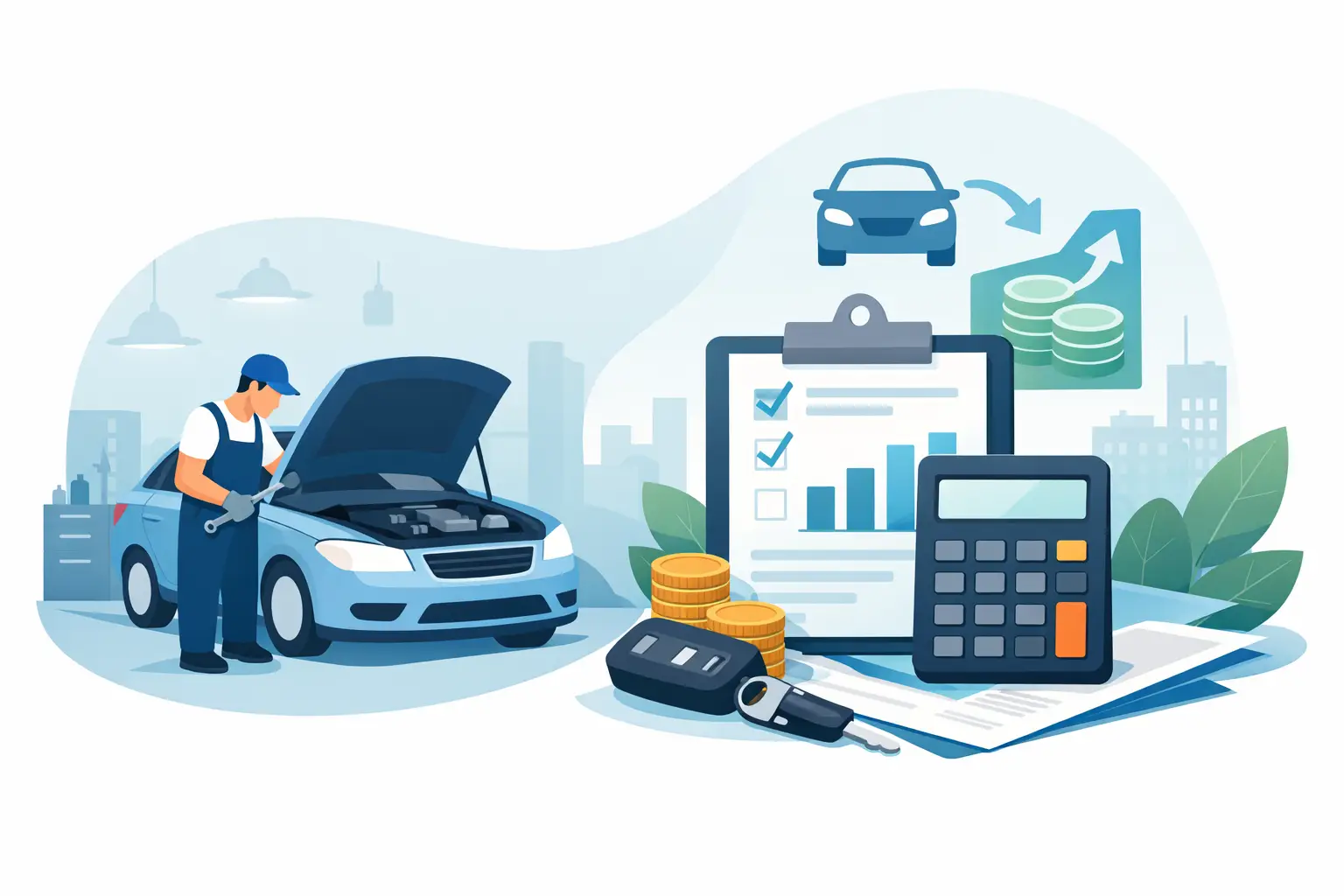
A car that will not start can turn a normal workday into an expensive emergency. This car repair loan example shows how a small personal loan may help cover a repair bill when you do not have enough cash available right away – and what the payments could look like before you request funds.
A car repair loan example for a $1,200 repair
Say a mechanic finds a failed alternator, worn belt, and battery damage. The estimate comes to $1,200, including parts and labor. You need the vehicle to get to work, but payday is still two weeks away and your savings will not cover the full bill.
You could request a $1,200 unsecured personal loan and choose a repayment term that fits your budget. Unlike an auto loan, a personal loan generally does not use your vehicle as collateral. If approved, you can use the money for the repair, towing, replacement parts, or other related costs.
Here is one payment illustration:
| Loan amount | Example APR | Term | Estimated monthly payment | Estimated total repaid | | — | —: | —: | —: | —: | | $1,200 | 35.99% | 12 months | About $121 | About $1,452 |
This example is for illustration only. Your available loan amount, APR, payment, fees, and term depend on the lender and your application. A lower APR can reduce the overall cost. A shorter term may reduce total interest, but it can also raise the monthly payment.
For example, paying about $121 per month may feel manageable if you have steady income. But if that payment would make it difficult to cover rent, groceries, utilities, or insurance, a longer term could lower the monthly payment. The trade-off is that you may pay more interest over time.
How the loan cost can change
A $1,200 repair does not always mean you should borrow exactly $1,200. Ask the shop whether the estimate includes diagnostic fees, taxes, shop supplies, and any additional work that may be found once repairs begin. If the final bill could reasonably reach $1,400, borrowing too little may leave you with another urgent gap.
At the same time, avoid borrowing extra just because it is available. Every dollar borrowed can add to the amount you repay. The right amount is usually the amount needed for the confirmed repair and a small, realistic cushion for related costs such as towing or transportation while your car is in the shop.
Consider these three examples for the same $1,200 loan amount:
| Example APR | Term | Estimated monthly payment | Estimated total repaid | | —: | —: | —: | —: | | 24.99% | 12 months | About $114 | About $1,368 | | 35.99% | 12 months | About $121 | About $1,452 | | 59.99% | 18 months | About $101 | About $1,818 |
The longer 18-month option has the lowest payment in this example, but it also has the highest total repayment. That difference matters when you are deciding between immediate relief and the cost of carrying the loan longer.
When a car repair loan can make sense
A repair loan may be worth considering when the repair is necessary to keep your vehicle safe or usable and you have a clear plan to make the payments. Common urgent repairs include brakes, tires, a transmission issue, a starter, engine cooling problems, and electrical failures that prevent the vehicle from running.
It can also make sense when fixing the car costs less than losing access to it. Missing work, paying for rideshares every day, or relying on expensive short-term transportation can quickly add up. If a repair gets you back on the road and the payment fits your budget, borrowing may be a practical option.
Still, financing is not the only answer. If the repair is not urgent, ask the mechanic whether the work can be safely delayed. You may also ask whether the shop offers a payment arrangement, whether a used or rebuilt part is available, or whether a second estimate reveals a less expensive fix. A loan should solve a real problem, not rush you into a bill you do not understand.
Check the repair estimate before requesting funds
A clear estimate helps you borrow with confidence. Ask the repair shop to explain what failed, why the repair is needed now, and whether there are different part options. A good estimate separates labor, parts, taxes, and diagnostic charges so you can see where your money is going.
If the issue is major, getting another opinion can be smart. A second mechanic may confirm the diagnosis, identify unnecessary work, or offer a different repair approach. This can take extra time, so it may not be practical when the vehicle is stranded or unsafe. But for a large estimate, even one phone call could potentially save you hundreds of dollars.
Also check whether any repair is covered by a manufacturer warranty, an extended service contract, roadside assistance benefit, or insurance policy. Mechanical breakdowns are not typically covered by standard auto insurance, but there can be exceptions after an accident or specific covered event.
How to request a loan for car repairs online
When the repair cannot wait, an online request can be faster than applying through a traditional bank branch. With Yup Loans, you can submit a short online request to be connected with potential lending partners. The process is designed for borrowers who need to explore small-dollar funding options without a long application process.
You will generally need basic personal, contact, income, employment, and banking information. Lenders may review your credit profile, but qualifying options can be available for a range of credit situations. No credit profile guarantees approval, and submitting a request does not guarantee that you will receive an offer.
Before accepting any offer, review the loan agreement carefully. Focus on the amount you will receive, the APR, payment amount, payment due dates, total repayment, and any fees. Some lenders may charge an origination fee, which can reduce the amount deposited into your account. If you need $1,200 for the mechanic, make sure the net amount you receive will actually cover the repair.
Funding timing varies by lender, bank, application details, and the time of day you are approved. Some borrowers may receive funds as soon as the same business day, while others may need to wait longer. Do not schedule work based on an expected deposit until you understand the lender’s funding timeline.
Choose a payment you can actually keep
The most useful loan offer is not always the one with the largest amount. It is the one with a payment you can make every month without creating a new emergency. Look at your next few paychecks and subtract essential expenses first. Then decide what payment amount leaves enough room for gas, food, utilities, insurance, and unexpected costs.
If your income changes from week to week, build in more breathing room. A lower monthly payment may be safer than a fast payoff schedule that works only in a perfect month. On the other hand, if you can comfortably afford a higher payment, a shorter term could lower the interest you pay overall.
Missing payments can lead to late fees, added interest, credit damage, and collection activity depending on the loan terms. If you think a payment may be difficult, contact the lender as early as possible. Waiting until after the due date gives you fewer options.
A fast repair decision starts with the real numbers
A car repair loan can help bridge the gap between an urgent mechanic bill and your next paycheck, but the repair itself should still make financial sense. Compare the estimate, borrow only what you need, and read every loan term before accepting an offer. Getting back on the road matters, and so does choosing a payment that lets you stay there.