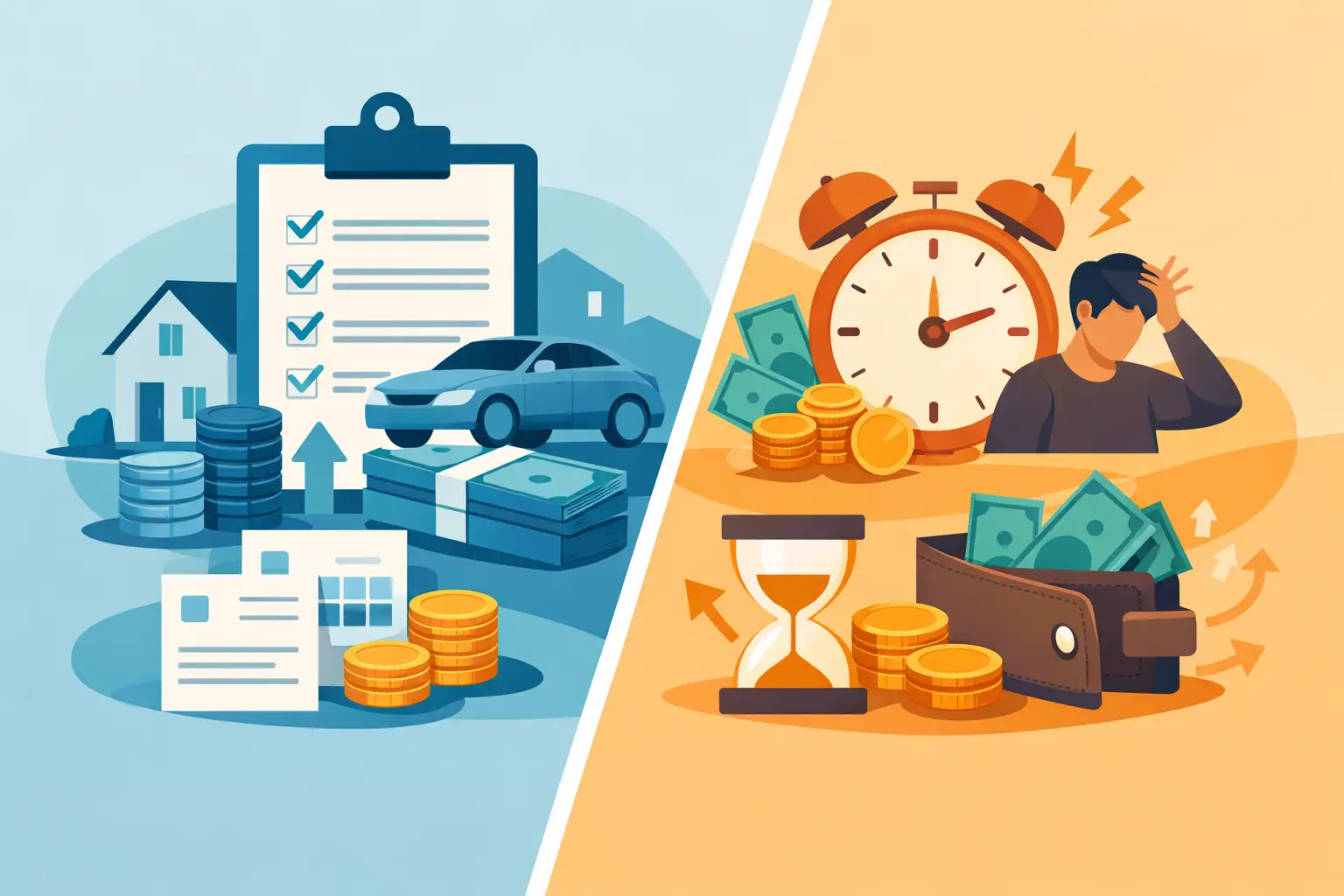
A cash shortfall can turn into a same-day problem fast. If you’re weighing installment loans vs payday loans, the real question is not just how quickly you can get money – it’s how hard that loan will be to repay when the due date hits.
For many borrowers, both options show up during urgent searches for rent money, car repairs, utility bills, or emergency expenses. Both can offer fast access to cash. But they work very differently, and that difference can affect your budget for weeks or even months. If you need money now, you want the loan that solves the problem without creating a bigger one right after.
Installment loans vs payday loans: the basic difference
An installment loan gives you a set amount of money and lets you repay it over time through scheduled payments. Depending on the lender, repayment may be spread over a few months or longer. The payment amount is usually fixed, which can make planning easier.
A payday loan is usually a much smaller, very short-term loan designed to be repaid by your next paycheck. Instead of making payments over several months, you often owe the full amount plus fees in one lump sum. That structure is the biggest reason payday loans can become difficult to manage.
On the surface, both products may look like quick solutions. The key difference is what happens after funding. One is built around multiple payments. The other often expects full repayment almost immediately.
How repayment works in real life
Repayment is where many borrowers feel the impact most.
With an installment loan, you borrow a set amount and repay it in equal or scheduled installments. If you take out a loan for a few hundred or a few thousand dollars, the balance is reduced gradually. That can ease pressure on your next paycheck because you are not trying to cover the entire loan at once.
With a payday loan, the lender may expect repayment in a single payment tied to your pay cycle. If money is already tight, that can leave you choosing between paying the loan and covering regular bills. When borrowers cannot pay the full amount on time, extra fees or renewals can raise the total cost quickly.
This is why the cheaper-looking fast option is not always the easier one. A shorter term may sound good, but only if the repayment schedule fits your real budget.
Cost matters more than speed
When people need emergency funds, speed gets the attention first. That makes sense. If your car is in the shop or your electric bill is due, waiting around is not realistic. But a fast loan with a repayment structure you cannot handle can cost more than the original emergency.
Installment loans may carry high rates depending on the lender, your credit profile, your state, and the loan amount. Still, they often give borrowers more time to repay, which can make the debt more manageable. You are paying over time instead of facing one large due date.
Payday loans are known for very high fees relative to the amount borrowed. Even when the dollar fee seems small, the cost can be steep because the term is so short. If the loan rolls over or gets renewed, the total expense can rise fast without reducing the original balance much.
That does not mean every installment loan is cheap or every payday loan leads to trouble. It means you should look past the promise of instant cash and focus on the full repayment amount, the due dates, and what happens if you need more time.
Which option is usually easier on your budget?
For most borrowers, installment loans are easier to fit into a monthly budget because payments are spread out. If you know what you owe each pay period or each month, you can plan around it. That predictability matters when your income is already stretched.
Payday loans are usually harder on a tight budget because they compress repayment into a very short window. If your next paycheck is already spoken for, paying the loan in full may force you to borrow again. That cycle is one of the biggest risks with payday borrowing.
If your goal is to solve a short-term cash gap and move on, an installment structure often gives you more breathing room. The trade-off is that you may stay in repayment longer. For many people, that is still better than having the full loan hit all at once.
Credit requirements and approval flexibility
Many borrowers searching for these loans are worried about credit. That is normal, especially if you have been turned down before or your score is not where you want it.
Payday lenders often focus less on traditional credit standards and more on income and an active bank account. That can make payday loans accessible, but accessibility alone should not be the deciding factor.
Installment lenders may also work with a broad range of credit profiles, including bad-credit applicants, depending on the lender and platform. Some online lending marketplaces, including Yup Loans, connect borrowers with lenders that consider more than just a high credit score. That can give applicants another path to request funds without limiting themselves to a payday product.
The important point is this: bad credit does not automatically mean payday is your only option. If an installment loan is available, it may offer a repayment setup that is easier to handle.
When an installment loan may make more sense
An installment loan may be the better fit if you need more than a very small amount, want structured payments, or know you cannot repay everything from your next paycheck. It can also make more sense if your expense is serious enough that one missed budget cycle would cause another problem, like a late rent payment or utility shutoff.
This option is often more practical for repairs, medical bills, travel emergencies, or other expenses that require a little more room to repay. It is not risk-free. You still need to review rates, fees, and loan terms carefully. But the payment structure is usually more realistic for people who need time.
When a payday loan might appeal to borrowers
A payday loan usually appeals to borrowers who need a small amount immediately and expect to repay it in full very soon. If someone has guaranteed income arriving in days and no other borrowing option is available, they may look at payday lending for speed and simplicity.
Even then, the margin for error is thin. If that paycheck comes in short, gets delayed, or is needed for groceries and rent, the loan can become harder to clear than expected. That is why payday borrowing tends to work only in narrow situations where repayment is truly certain.
Questions to ask before you borrow
Before you accept either loan type, slow down long enough to check the terms. Ask what the total repayment amount will be, not just the amount you receive. Ask whether payments are fixed, when they are due, and whether there are late fees or rollover options.
You should also look at how the payment fits into your next few weeks. If making the payment means you will have to borrow again, that is a warning sign. Fast funding helps only if the loan leaves you in a better position after the emergency passes.
The smarter choice depends on what happens after funding
The headline difference in installment loans vs payday loans is simple: one spreads repayment out, and the other usually does not. For many borrowers dealing with urgent expenses, that single difference can decide whether the loan feels manageable or overwhelming.
If you need cash quickly, speed still matters. But terms matter just as much. A loan that gives you a clear repayment path can be far more useful than one that solves today’s bill and creates next week’s problem.
When you’re under pressure, the best borrowing option is usually the one that gives you enough time to recover, not just enough time to get through today.