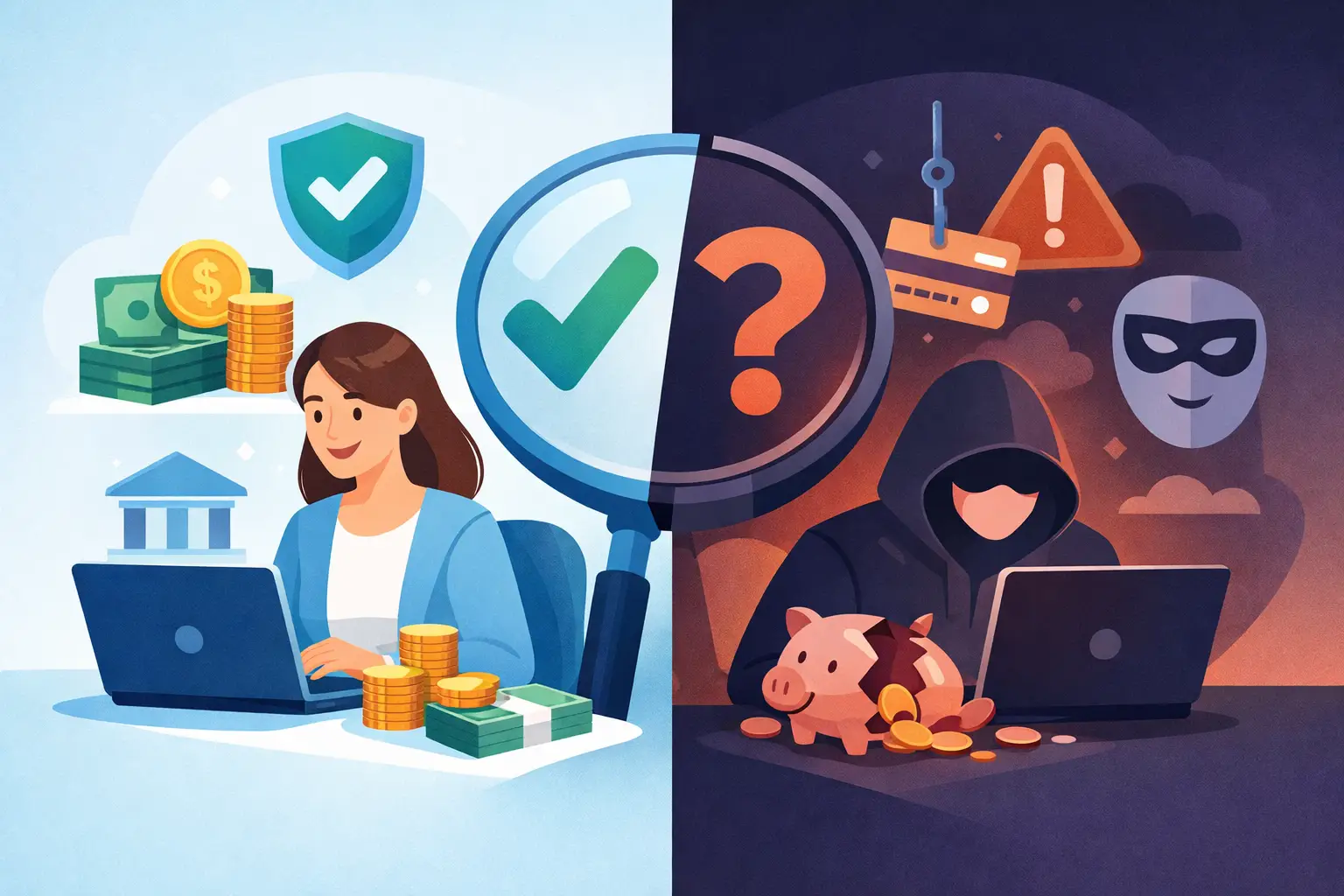
A loan offer that shows up fast can feel like a lifesaver when rent is due, your car needs work, or a medical bill lands at the worst possible time. That is why people ask, is online personal loans legit? The short answer is yes – many online personal loans are legitimate. But not every offer is safe, and when you need money quickly, the wrong lender can cost you even more.
The good news is that there are clear signs that separate a real loan option from a scam. If you know what to look for, you can move faster and protect yourself at the same time.
Is online personal loans legit for emergency borrowing?
Yes, online personal loans can be a legitimate way to borrow money, including for urgent expenses. Many real lenders and loan marketplaces let borrowers complete a short application online, review offers, and in some cases receive funds as soon as the same day.
That convenience is exactly why online borrowing has grown so much. You do not need to visit a branch, sit through a long interview, or wait days just to find out whether you qualify. For people with busy schedules, limited transportation, or less-than-perfect credit, that easier process matters.
Still, speed alone does not prove a loan is real. Scammers also use fast promises. A legitimate online loan should come with clear terms, repayment details, lender disclosures, and a process that makes sense from start to finish.
What makes an online personal loan legitimate?
A legitimate loan provider is transparent about the basics. You should be able to see how much you may borrow, how long repayment may last, what fees may apply, and the annual percentage rate range before you commit.
Real lenders also verify information. That may feel inconvenient when you need cash now, but it is actually a good sign. A lender that asks for income details, identity verification, and banking information through a secure process is behaving more like a real financial company than a scammer.
Another good sign is that the company explains whether it is a direct lender or a marketplace. That distinction matters. A direct lender funds loans itself. A marketplace or connection service collects your request and matches you with participating lenders or financial partners. Both models can be legitimate, as long as the site clearly explains its role.
If you use a service like Yup Loans, for example, the process is designed to connect borrowers with lender partners through a quick online request. That can be helpful if you want to compare possible options without filling out a separate application on multiple sites. The key is knowing you are requesting a connection, not automatically getting guaranteed approval.
Red flags that should make you stop
Some warning signs are easy to miss when money is tight. That is exactly why scammers use them.
The biggest red flag is an upfront fee. If a company says you must pay before receiving your loan, walk away. Legitimate lenders generally deduct certain fees from the loan proceeds or include them in the cost of borrowing, but they do not ask you to send money first through gift cards, wire transfers, crypto, or payment apps.
Guaranteed approval is another problem. No real lender approves every borrower without reviewing at least some financial details. Even lenders that work with bad credit borrowers still check information like income, identity, and ability to repay.
Watch for pressure tactics too. If a lender says the offer expires in minutes unless you pay now or share sensitive information immediately, slow down. Urgency is common in marketing, but extreme pressure is often a scam signal.
Poor website quality can matter as well. A site with no disclosures, no privacy policy, no contact details, and vague language about rates or terms should not get your personal information. Typos alone do not prove fraud, but a messy site plus unrealistic claims is a bad combination.
How to tell if an online loan offer is safe
Start with the terms. A real lender or marketplace should explain the loan amount range, repayment terms, possible APR range, and important conditions in plain language. If basic facts are missing, that is a problem.
Next, check how the application works. A normal process asks for your name, address, income, employer or benefits information, and bank details. That is standard. What is not standard is being asked for your online banking password, a gift card payment, or money to “hold” your approval.
Then look at communication. Professional companies usually use secure websites, clear emails, and customer support channels that make sense. If you are getting random text messages from unverified numbers or being told to move the conversation to a private messaging app, be careful.
It also helps to read the disclosures closely. This is where you find out whether your loan request may be shared with lender partners, whether a credit check may happen, and what repayment could look like. Fast funding is useful, but understanding the agreement matters more than finishing the form in two minutes.
Bad credit does not mean every offer is fake
A lot of borrowers search online because banks have already said no. That creates another question: if a lender says all credit types are considered, is that real?
Sometimes, yes. Some lenders and marketplaces are built for borrowers with bad credit, thin credit, or recent financial setbacks. They may focus more on income and banking history than a high FICO score. That does not make the offer suspicious by itself.
What matters is how the offer is presented. “All credit types welcome” can be legitimate. “You are approved no matter what, send $100 now” is not. The difference is transparency.
There is also a trade-off here. Borrowers with lower credit scores often face higher APRs, smaller loan amounts, or shorter repayment terms. That can still be worth it in an emergency, but only if the payment fits your budget. A fast loan solves one problem only if it does not create a bigger one next month.
Marketplace vs direct lender – why it matters
When people ask whether online personal loans are legit, they are often really asking whether the website they found is legit. That is where the difference between a direct lender and a loan marketplace becomes important.
A direct lender reviews your application and makes the lending decision itself. A marketplace collects your information and routes it to one or more lenders that may make an offer. Neither is automatically better. It depends on what you need.
A direct lender may give you a more straightforward one-company experience. A marketplace may save time by helping you reach multiple potential lenders through one request. If your credit is challenged or your need is urgent, that wider reach can be useful.
The main thing is disclosure. You should know who is handling your information, whether your request will be shared, and who you are actually borrowing from before signing any agreement.
Smart steps before you accept any online loan
Before you accept an offer, take one more look at the full cost. The monthly payment matters, but so does the total repayment amount. A smaller payment can still be expensive if the term is longer or the fees are high.
Make sure the deposit timeline is clearly explained. Some companies advertise fast funding, but timing depends on lender approval, verification, and your bank. Same-day funding may be possible, but it is not automatic in every case.
You should also verify that the payment schedule works with your income. If your paycheck arrives every two weeks, a payment due at the wrong time can trigger overdrafts or missed bills. A legitimate loan should help you cover a gap, not push you into a cycle of late fees.
Finally, trust your instincts. If the company avoids direct answers, changes terms suddenly, or makes you feel rushed and confused, do not proceed. A real lender wants you to understand what you are agreeing to.
So, is online personal loans legit?
Yes, online personal loans are often legitimate, and for many borrowers they are one of the fastest ways to handle an urgent expense. But legitimate does not mean every offer is a good one, and fast does not mean risk-free.
The right move is simple: look for clear terms, real disclosures, no upfront fees, and a process that respects both your time and your personal information. If a lender or marketplace checks those boxes, online borrowing can be a practical option when you need money quickly.
When cash is tight, speed matters. Just make sure clarity comes with it.