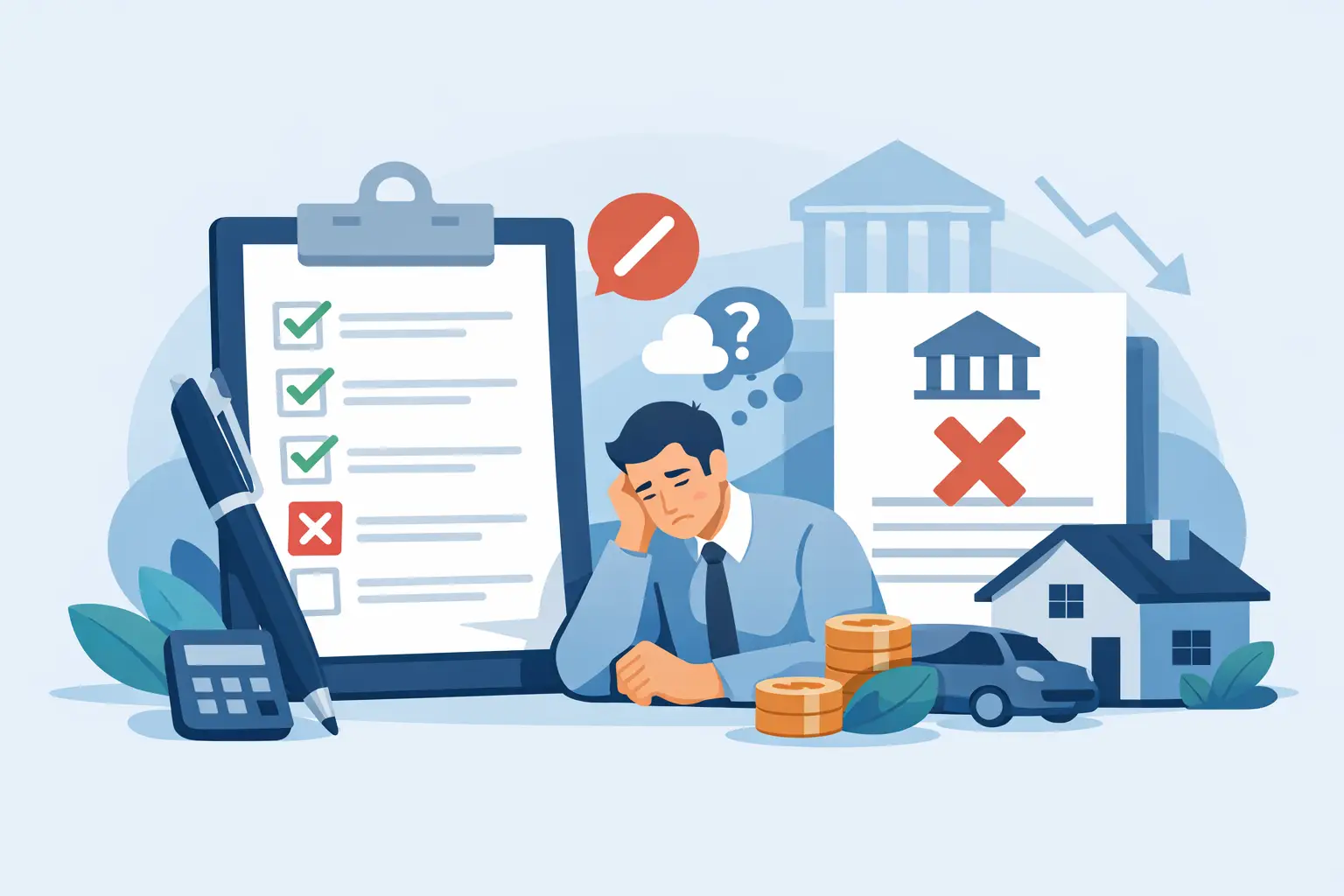
Getting turned down when you need cash fast is frustrating, but a solid loan denial reason checklist can help you figure out what went wrong and what to fix before you apply again. If you were expecting a quick yes and got a no instead, there is usually a specific reason behind it – and in many cases, it can be improved.
When lenders review an application, they are trying to answer one basic question: can this borrower reasonably repay the loan as agreed? That decision is not based on one number alone. Credit score matters, but so do income, recent banking activity, debt load, identity details, and whether your application lines up cleanly with lender requirements.
Loan denial reason checklist: what lenders look at
A useful loan denial reason checklist starts with the most common issues. Some are obvious, like low income or bad credit. Others catch people off guard, like a typo in an address, a recent job change, or bank account activity that makes income hard to verify.
The first checkpoint is identity and application accuracy. If your name, Social Security number, address, phone number, or employer information does not match what a lender or verification system sees, your application may stall or get denied. This does not always mean fraud is suspected, but lenders are careful when details do not line up.
The next checkpoint is income. Lenders want to see enough reliable income to cover the new payment along with your current bills. That does not always mean a huge paycheck. It means consistency. A borrower with steady direct deposits every two weeks may look more stable than someone with higher but irregular income.
Debt is another major factor. Even if your credit score is fair, high monthly obligations can hurt your chances. If too much of your income is already committed to rent, credit cards, auto loans, or other installment loans, a lender may decide there is not enough room for another payment.
Then there is credit history. A denial can happen because of recent late payments, collections, defaults, charge-offs, bankruptcy, or a very thin file with not enough borrowing history. For smaller personal loans, some lenders are flexible, but flexibility still has limits.
Common reasons a loan gets denied
If you want to move from confusion to action, focus on the specific issues that most often trigger denials.
Low or unstable income
A lender may deny a loan if your income is too low for the amount requested, or if it appears unpredictable. Gig work, self-employment, seasonal work, and newly started jobs are not automatic disqualifiers, but they can require stronger documentation. If deposits vary a lot month to month, underwriting can get tougher.
High debt-to-income ratio
This is one of the biggest denial triggers. If your current monthly debt payments already take up a large share of your income, even a small new loan can look risky. Someone can earn decent money and still get denied if their obligations are already stretched.
Poor credit or recent negative marks
A low score does not always mean no options, especially with lenders that consider more than credit alone. Still, recent missed payments, defaults, repossessions, or collections can drag down your approval odds. Fresh negative activity usually hurts more than older issues because it signals current stress.
Too many recent applications
If you have applied for several loans or credit products in a short period, lenders may see that as a warning sign. It can suggest urgent financial pressure or a pattern of taking on more debt than you can manage. One or two inquiries may not matter much. A cluster of them can.
Employment issues
Lenders like stability. If you just changed jobs, have gaps in employment, or cannot easily verify your employer, that can create problems. This does not mean unemployed borrowers can never qualify, but the lender will usually want to see another reliable source of income.
Banking problems
For online loans, your bank account matters. Lenders may review account age, deposit history, overdrafts, returned payments, and whether the account can receive direct deposits. Frequent negative balances can raise concerns even when your stated income looks acceptable.
Incomplete or inconsistent application details
A rushed application can lead to simple mistakes that cost you. The wrong paycheck amount, a mistyped address, an old phone number, or mismatched dates can all trigger a denial or manual review. If your documents and your application tell two different stories, lenders usually side with caution.
Loan amount does not fit your profile
Sometimes the issue is not the application itself. It is the amount requested. If you ask for more than your income, credit profile, or recent account history can support, the lender may deny the request. In some cases, a lower amount may have had a better chance.
How to use a loan denial reason checklist before you reapply
The smartest move after a denial is not to rush into another application five minutes later. Start by slowing down long enough to spot the weak points.
Review the information you submitted and compare it against your pay stubs, bank records, ID, and contact details. Make sure your income was entered correctly, your employer information is current, and your bank account is active and in good standing. This sounds basic, but accuracy fixes more denials than people expect.
Next, look at your debt picture. Add up your minimum monthly payments, including credit cards, personal loans, auto loans, and any buy now, pay later plans. If the total is eating up too much of your paycheck, that may be the issue. Paying down even one small balance can improve your profile.
Then check your credit reports for recent damage or errors. If there is a collection you did not recognize or an account marked late by mistake, dispute it. If the negative information is accurate, at least you know where you stand. Clarity helps you choose the right next step instead of guessing.
Also think about timing. If you just started a new job last week, had a recent overdraft streak, or missed a payment this month, waiting a little may help. Not every problem needs a long recovery period. Sometimes 30 to 60 days of cleaner banking activity and on-time payments can make a difference.
What to fix first if you need a loan soon
If you need money quickly, you probably do not have six months to rebuild everything. Focus on the issues most likely to move the needle fast.
Start with your application details. Clean up any errors and make sure every field matches your documents. Then review the amount you are requesting. A smaller request may be more realistic if your income or credit is borderline.
After that, stabilize your bank account. Avoid overdrafts if possible, make sure your income is landing consistently, and keep the account open and active. For many online lenders, this matters almost as much as your credit file.
If debt is the issue, reduce what you can. Paying off a small card balance or catching up a past-due account may help more than you think. And if your income is hard to verify, gather proof before you apply again. Direct deposit records, pay stubs, benefit letters, or tax documents can help support your case.
When denial does not mean you have no options
A denial from one lender is not the same as a universal no. Lenders use different approval models, different minimum requirements, and different levels of flexibility. Some focus heavily on credit score. Others care more about income patterns, bank activity, or whether the loan request fits the borrower.
That said, applying everywhere at once is rarely the right move. Too many applications can create a bigger problem. It is better to fix what you can, apply with accurate information, and look for options that match your current profile instead of chasing a perfect scenario.
For borrowers with imperfect credit, speed still matters, but so does fit. A platform like Yup Loans may help connect applicants with lenders that review a wider range of credit situations. That does not guarantee approval, and it does not erase the basic checks lenders use, but it can make the search less frustrating when traditional options say no too quickly.
A better approach for your next application
The best loan denial reason checklist is not just a list of problems. It is a way to take control of the next attempt. Look at your identity details, income consistency, debt load, credit activity, banking history, and requested amount. Those are the pressure points lenders keep coming back to.
If one area is weak, that does not always ruin your chances. But when two or three issues stack up at the same time, approval gets harder. Fix the easiest items first, be realistic about what you can qualify for, and give your next application a cleaner shot. A denial can feel final in the moment, but often it is just a signal that something specific needs attention before the next yes.