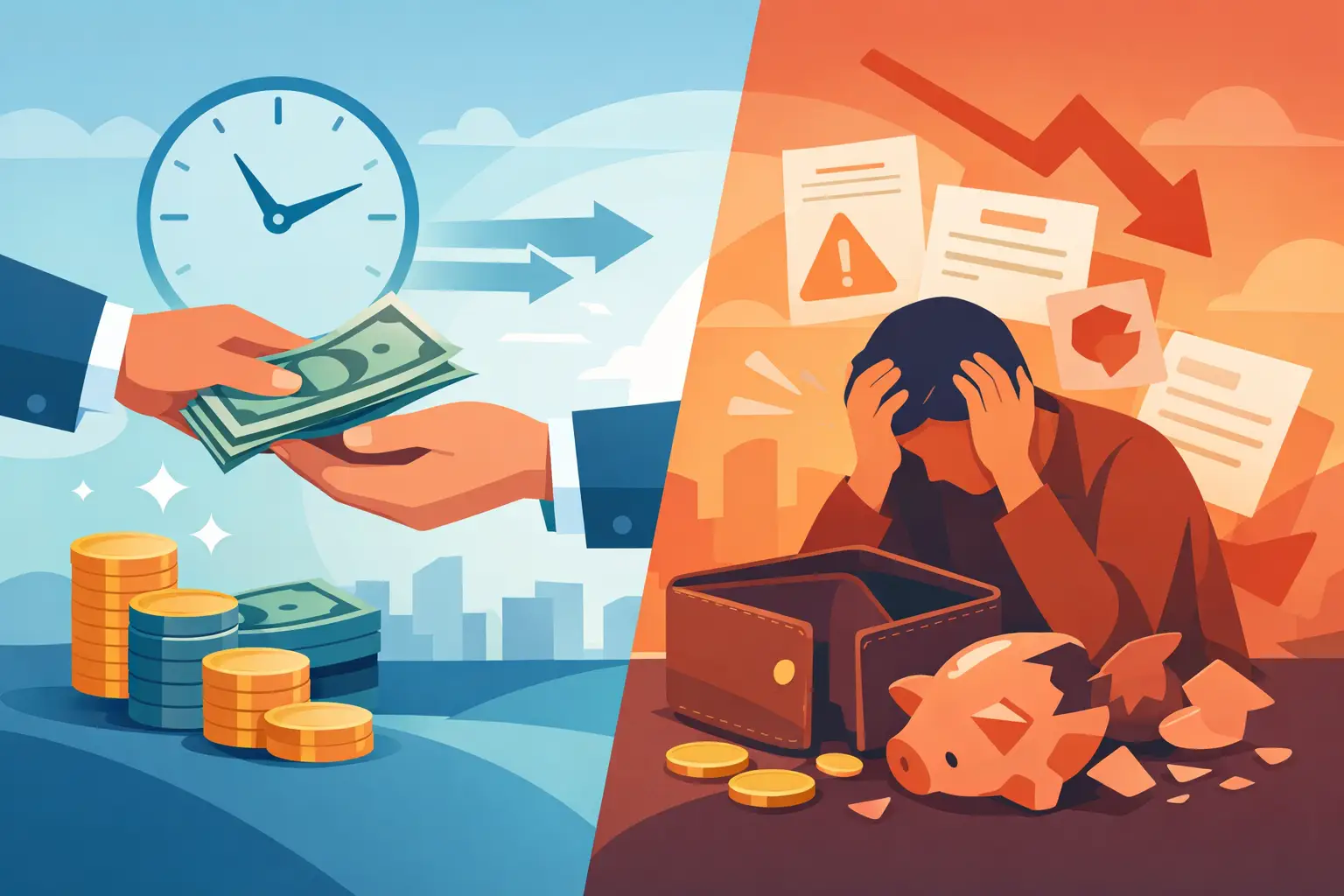
A shutoff notice, a surprise car repair, a prescription you cannot delay – this is usually when payday loans enter the picture. They are built for urgency. You borrow a small amount, get money quickly, and repay it on your next payday or over a short term. For people who need cash now, that speed can feel like the only thing that matters.
But speed is only half the story. The other half is cost, and that is where many borrowers get trapped. If you are comparing options, it helps to know exactly what payday loans do well, where they get expensive, and when a short-term personal loan may be the better move.
What payday loans are
Payday loans are small-dollar, short-term loans designed to cover immediate expenses until your next paycheck. The loan amount is often a few hundred dollars, though some lenders go higher depending on state rules and your income. Approval is usually based more on income and banking activity than on strong credit.
That is a big reason these loans stay popular. If your credit is bruised, thin, or recently damaged, you may still qualify. The application is often quick, the paperwork is lighter than a traditional bank loan, and funding can happen fast – sometimes the same day or by the next business day.
Still, short term does not always mean simple. Some payday products are due in one lump sum on your next payday. Others are structured as installment payments over a few months. That difference matters because repayment pressure changes a lot depending on the loan type.
How payday loans usually work
Most payday loan applications ask for basic personal details, proof of income, an active checking account, and contact information. The lender or lending partner reviews your information, checks basic eligibility, and then presents an offer if you qualify.
If you accept, the money is deposited into your bank account. In a classic payday structure, the lender may schedule repayment for your next pay date. In an installment version, you repay over time through fixed payments. Some online loan marketplaces also connect borrowers with lenders offering personal loans that go beyond the standard payday model, which can give you more room to repay.
That is often the key trade-off. A faster, smaller loan can solve a short cash gap, but the shorter the repayment window, the harder it is to absorb the payment without creating a new shortage.
The real cost of payday loans
The price of payday loans can look manageable at first because lenders often present a flat fee instead of leading with APR. For example, a fee of $15 to $30 per $100 borrowed may not sound huge when the bill is due tomorrow and your paycheck is a week away.
The problem is how that fee translates over time. On an annual percentage rate basis, payday loans can carry very high costs. If repayment gets pushed out through rollovers, renewals, or repeated borrowing, the total amount paid can climb fast.
This is where borrowers get squeezed. If you borrow to fix one emergency but then need another loan to cover rent, utilities, or groceries after repayment hits, the cycle can become expensive quickly. Fast money helps in the moment. Expensive money creates pressure later.
When payday loans may make sense
There are situations where payday loans can serve a purpose. If the need is truly urgent, the amount is small, and you know with confidence that you can repay on schedule without missing other essentials, a short-term loan can be a temporary bridge.
For example, avoiding a late utility shutoff, paying for a work-related car repair, or covering a medical copay may justify the cost if the alternative is worse. Timing matters here. If a short delay would trigger larger fees, lost wages, or service interruption, the loan may be worth considering.
But this only works when the repayment plan is realistic. If your next paycheck is already spoken for, borrowing against it may not solve much. It may only move the stress forward by two weeks.
When to think twice about payday loans
If you are using a payday loan for routine living expenses, that is usually a warning sign. Groceries, monthly bills, and rent are recurring costs. A short-term, high-cost loan is not built to support a long-term budget gap.
You should also be cautious if the lender encourages refinancing, renewing, or taking out another loan right after the first one. That pattern can raise your total borrowing cost without fixing the underlying issue. A loan that seems easy to get can become hard to exit.
Another reason to pause is uncertainty. If your work hours fluctuate, your next paycheck is smaller than usual, or another bill is coming due before repayment, the risk goes up. In those cases, a slightly larger installment loan with a longer repayment term may actually be safer, even if the total borrowed amount is higher.
Payday loans vs. short-term personal loans
This is where many borrowers benefit from slowing down for five minutes. Payday loans are one type of fast cash option, but they are not the only one. Short-term personal loans, especially from online lender networks, can offer a similar speed advantage with more manageable payments.
The biggest difference is structure. Payday loans often compress repayment into one very short window. Personal installment loans spread payments over several months. That can lower payment shock and reduce the chance that one due date knocks your budget off track.
Approval standards can also be broader than many people expect. Some marketplaces work with lenders that consider multiple credit types, including bad credit or limited credit. That does not guarantee approval, and rates can still be high, but the repayment setup may be more practical.
For borrowers who need a few hundred to a few thousand dollars, a loan connection service like Yup Loans may help match that urgency with more than one possible path. That matters when you need speed but still want a chance to compare the cost and term before you accept an offer.
How to evaluate a payday loan offer
Before you sign anything, look past the promised funding speed and read the numbers. Start with the total repayment amount, not just the amount you are receiving. Then check the due date, payment schedule, fees, and whether the lender allows rollovers or charges penalties.
You also want to know whether the payment is being automatically withdrawn from your account. Auto-debit is convenient, but it can create overdraft problems if your balance is short on the due date. One missed calculation can trigger bank fees on top of loan fees.
State law matters too. Payday lending rules differ across the US. Some states cap fees or limit loan size, while others restrict or ban certain payday structures. That means the same loan amount can look very different depending on where you live.
A smarter way to borrow fast
If you need money today, focus on two things at the same time – how fast the funds can arrive and how realistic the repayment will be. Speed gets attention, but repayment decides whether the loan helps or hurts.
A good fast-cash option should match the size of your problem without creating a bigger one next pay period. That may be a payday loan for some borrowers. For others, it may be an installment loan, a lender marketplace, or another short-term borrowing option that gives more breathing room.
The best move is rarely the flashiest one. It is the one you can repay without falling behind on your next essential bill.
Payday loans and your next step
If you are considering payday loans, treat them like a tool, not a habit. Use them for urgent, limited needs. Borrow only what you need. Read the full terms. And if a lender offers an alternative with lower payment pressure, give that option serious attention.
When cash is tight, fast access matters. So does making sure the fix actually holds. The right loan should help you get through this week without making next month harder.