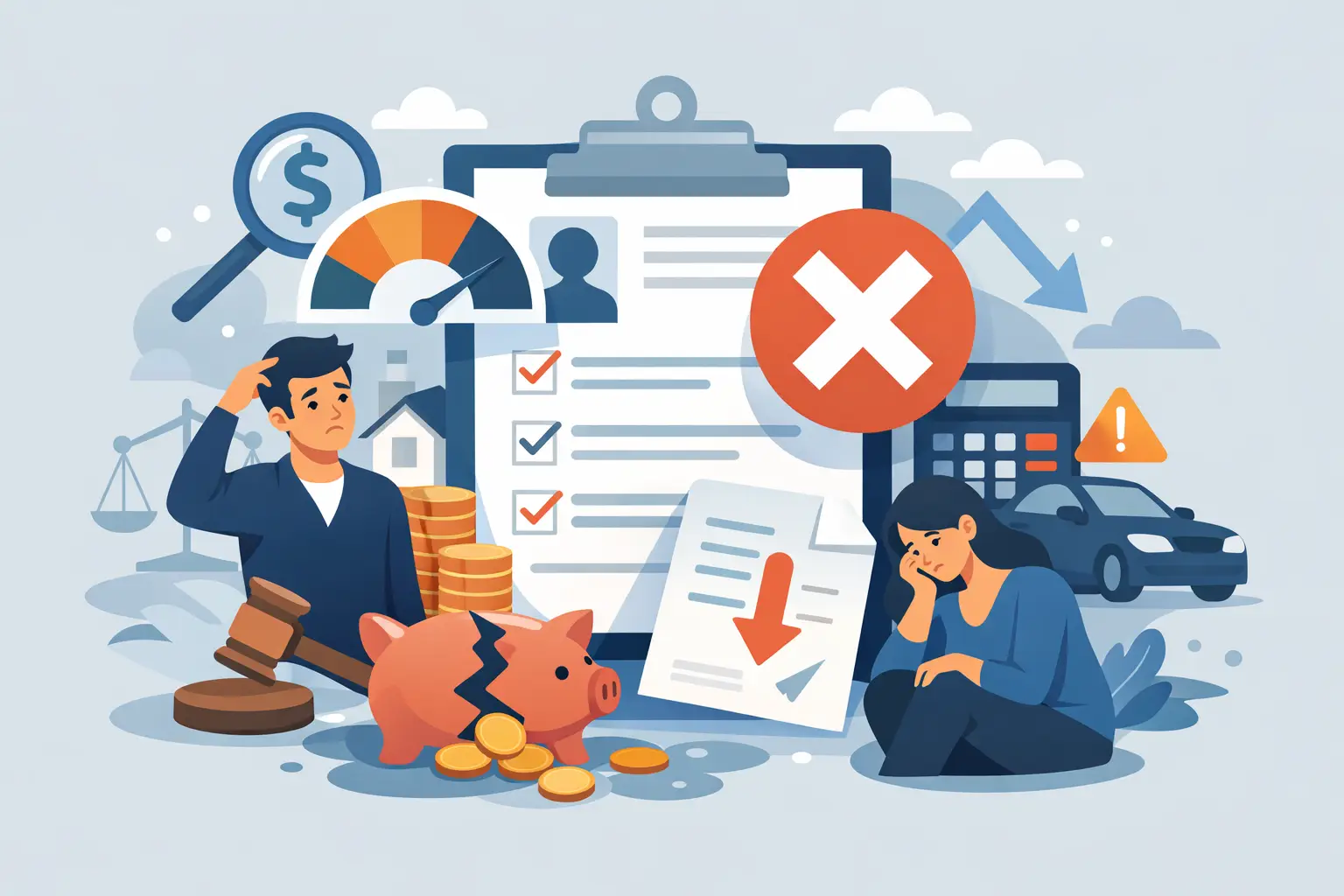
A loan application can look fine on the surface and still get turned down in minutes. That is why understanding the top reasons loan applications fail matters before you hit submit. If you need money for rent, repairs, medical bills, or another urgent expense, small mistakes can cost you time you do not have.
The good news is that many denials are preventable. Lenders and lending partners are usually looking for the same core signals – identity, income, banking details, and overall risk. If one of those pieces is weak, missing, or inconsistent, your application can stall fast.
The top reasons loan applications fail
Most rejected applications do not fail for one dramatic reason. They fail because the numbers do not add up, the information cannot be verified, or the borrower looks too risky for that lender’s rules. Here are the issues that come up most often.
1. Income is too low or cannot be verified
Lenders want to see that you have enough income to handle a new payment. That does not always mean you need a high salary, but it does mean your income has to look stable and believable. If your application says one amount and your bank activity or pay schedule suggests another, that mismatch can lead to a denial.
Verification matters just as much as the amount. If you are paid in cash, recently changed jobs, or entered your employer information incorrectly, the lender may not be able to confirm what you earn. For borrowers with nontraditional income, approval is still possible, but the details need to be accurate and consistent.
2. Debt-to-income looks too high
A lender is not only asking whether you earn money. It is asking how much of that money is already spoken for. If too much of your monthly income is going toward credit cards, existing loans, rent, child support, or other obligations, a new loan can look like too much strain.
This is one of those areas where it depends on the lender. Some are more flexible than others, especially for smaller loan amounts. Still, if your application shows tight cash flow, that can be one of the top reasons loan applications fail even when your credit score is not terrible.
3. Credit problems raise red flags
Bad credit does not automatically mean no. Plenty of borrowers with low scores still qualify for loan offers. But certain credit issues tend to trigger concern, especially recent defaults, charge-offs, collections, or multiple missed payments in a short period.
Lenders often care less about one old problem and more about current behavior. A thin credit file can also work against you because there is less history to evaluate. If the lender cannot get comfortable with your track record, the application may not move forward.
4. Too many recent applications
When someone applies for several loans or credit products in a short time, it can signal financial stress. Lenders may read that as a sign that the borrower is scrambling for cash or taking on more debt than they can manage.
This does not mean you should never compare options. It does mean timing matters. If your credit report shows a burst of recent inquiries, some lenders may pull back even if the rest of your profile is acceptable.
5. Errors on the application
Simple mistakes cause more denials than most people realize. A typo in your Social Security number, a wrong digit in your income, an outdated address, or a bank account entered incorrectly can stop the process cold. Automated systems flag inconsistencies quickly.
This is especially common when borrowers rush through an online form because they need money now. Speed matters, but accuracy matters more. A two-minute review before submitting can save hours or days of delay.
Why verification issues stop approvals fast
A lot of applications fail because the lender cannot confirm that the borrower is who they say they are. Fraud screening is a major part of online lending, and automated systems are built to reject anything that looks off.
Identity details do not match
If your name, address, date of birth, phone number, or Social Security number do not line up with available records, that can trigger an instant denial or a request for more documentation. Even small differences matter. Using a nickname on one field and your legal name on another can create problems.
For people who have moved recently, changed phone numbers, or use a different mailing address than their home address, extra care helps. The cleaner your information is, the better your chances.
Bank account problems get flagged
For many online loan requests, an active checking account is part of the process. If the account is new, overdrawn often, inactive, or entered with incorrect routing information, that can hurt your application. Some lenders also prefer accounts with a recent history of direct deposits because it helps verify income and repayment ability.
That does not mean every borrower needs a perfect bank record. But if the account information cannot support the application, approval gets harder.
Risk signals borrowers often miss
Some denials are frustrating because the borrower feels financially capable, yet the system still says no. Usually that comes down to behind-the-scenes risk factors.
Employment instability
A recent job change is not always a dealbreaker. But if you just started working, have large gaps in employment, or cannot document your current job clearly, a lender may hesitate. Stable work history gives lenders confidence that income will continue.
Gig work and self-employment can also be tougher to assess. These income sources are valid, but they often require cleaner records and more consistency than a standard paycheck job.
Requested loan amount is too high
Sometimes the issue is not the application itself. It is the amount requested. If you ask for more than your income or credit profile can support, the lender may decline rather than counter with a smaller amount.
This is where being realistic helps. A modest request may be easier to approve than a larger one, especially if your budget is already tight.
State, age, or eligibility rules
Some borrowers get denied because they do not meet basic eligibility requirements. That could include age, residency, income minimums, or lender availability in their state. These rules are easy to overlook when you are in a hurry, but they matter.
A marketplace like Yup Loans may connect borrowers with lending partners that have different criteria, which can improve access for some applicants. Even then, no platform can override a lender’s legal or underwriting requirements.
How to improve your odds before you apply
If you are trying to avoid a denial, the goal is simple: make your application easy to verify and easy to trust. Start by checking your personal details carefully. Your legal name, address, phone number, employer, income, and bank information should all be current and consistent.
Next, think about the story your application tells. If your income is real but irregular, use a number you can support. If your debt load is high, a smaller request may make more sense. If you have recent credit damage, avoid stacking multiple applications in one week and expect that offers may vary.
It also helps to check your bank account status before applying. An active account with valid routing and account numbers sounds basic, but it matters. So does having income that can be traced through deposits or other records.
Finally, be honest. Inflating income or hiding obligations may seem like a shortcut, but automated checks catch a lot. When data does not line up, the application often fails immediately.
When a denial does not mean the end
A rejection can feel final, especially when the need is urgent. But it often means one lender, or one lending criteria set, was not a match at that moment. Some lenders are stricter about credit, while others focus more on income or banking history. That is why outcomes can vary.
What matters is using the denial as feedback. If the problem was accuracy, fix the errors. If it was affordability, consider requesting less. If verification was the issue, gather cleaner information and reapply only when the details are solid.
The fastest path to funding is not guessing what a lender wants. It is giving clear, truthful, verifiable information the first time. When you do that, you put yourself in a much stronger position to get a decision quickly and move on with your day.