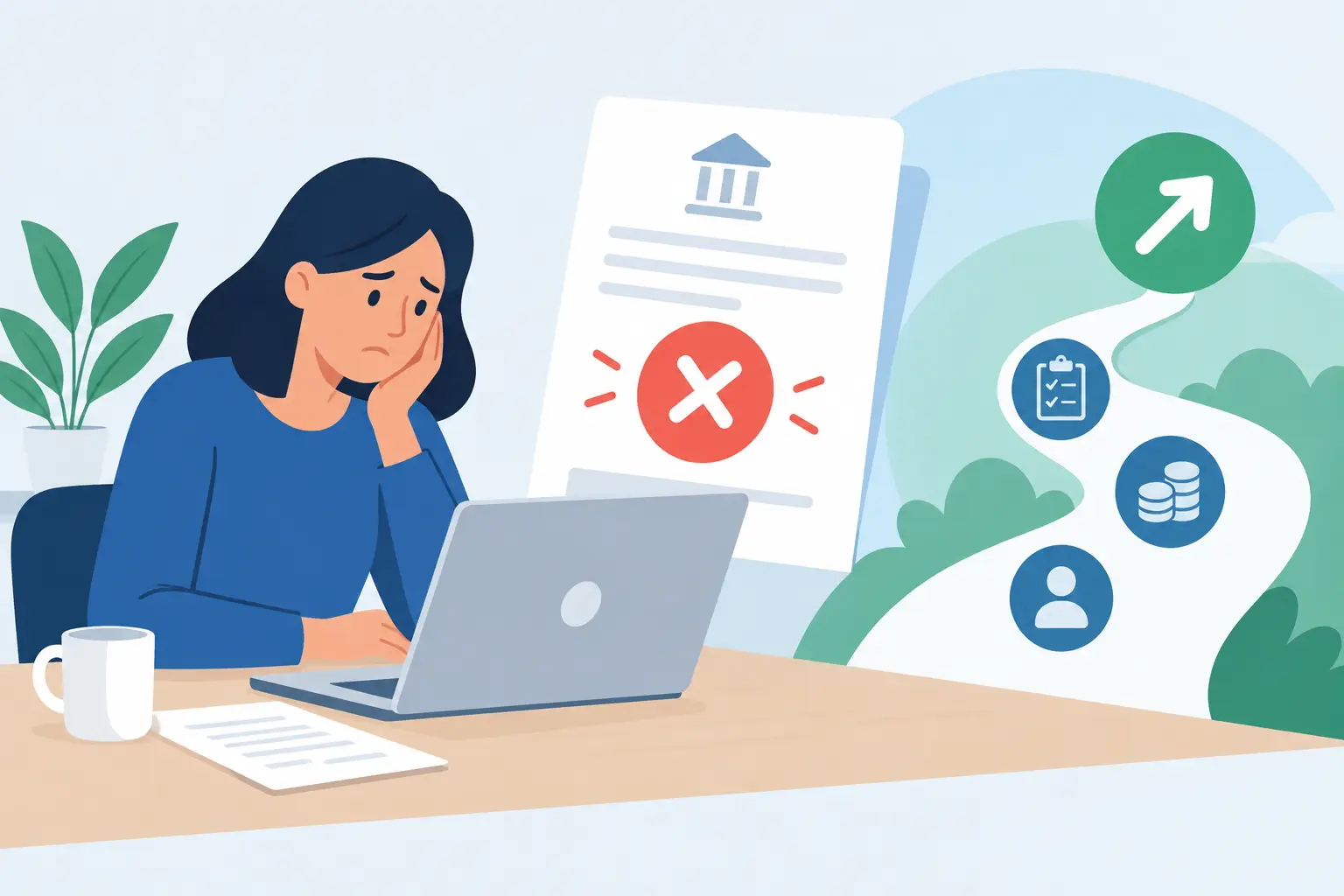
A rejected loan application can feel personal when you need money for a repair, medical bill, rent, or another urgent expense. But why loan applications fail usually comes down to a lender’s risk rules, not a judgment about you. Different lenders look for different things, and one denial does not automatically mean every available loan option is out of reach.
The fastest way forward is to understand what may have triggered the decision, correct what you can, and apply with realistic expectations. A quick online request can help you explore options, but approval, rates, terms, and funding timing are always determined by the lender.
Why Loan Applications Fail: The Main Reasons
Lenders use an application to estimate whether a borrower can repay a loan as agreed. Credit score matters, but it is only one part of the picture. Income, current debts, banking information, identity checks, and application accuracy can all affect the result.
Income does not meet the lender’s requirements
A lender wants to see a dependable source of income and enough room in your budget for another monthly payment. That does not always mean you need a traditional full-time job. Depending on the lender, wages, self-employment income, benefits, retirement income, or other regular income may be considered.
Problems arise when reported income cannot be verified, changes from one document to another, or simply is not enough relative to the requested loan amount and payment. Asking for a smaller amount may make more sense if your income is limited. Borrow only what you need for the expense at hand.
Debt payments are already taking up too much income
Your debt-to-income ratio compares your recurring monthly debt payments with your monthly income. A high ratio can signal that a new payment may be difficult to manage, even if you have a fair credit score.
Credit cards, auto loans, student loans, child support obligations, and existing installment loans can all affect the calculation. Paying down a balance can help over time, but do not drain money needed for essentials just to improve an application. When cash is tight, a smaller request or a lender with different eligibility criteria may be more practical.
Credit history has recent warning signs
Late payments, accounts in collections, charge-offs, bankruptcy, or a history of missed loan payments can lead to a denial. Some lenders also put more weight on recent activity than older issues. A late payment from last month may concern a lender more than a problem from several years ago.
Bad credit does not always end the conversation. Some lenders work with borrowers across a wider range of credit profiles. Still, applicants with lower scores may receive fewer offers, smaller approved amounts, higher annual percentage rates, or shorter repayment terms. Review the full loan terms before accepting any offer, especially the total cost and scheduled payments.
The application contains errors or missing details
A simple typo can stop an application. An incorrect Social Security number, mismatched address, outdated phone number, wrong employer information, or incomplete bank details may prevent a lender from confirming who you are.
Take an extra minute before submitting. Use your legal name exactly as it appears on your identification and financial records. If a lender asks for documents or additional details, respond promptly and provide accurate information. Guessing or entering information that cannot be verified can result in a decline.
Identity or bank account verification cannot be completed
Online lenders need to verify identity and, in many cases, an active checking account. This helps reduce fraud and gives the lender a way to deposit funds and collect scheduled payments.
Verification may fail because your account is new, closed, overdrawn, not in your name, or inconsistent with the information on your application. Security freezes, fraud alerts, and address changes can also slow down identity checks. These issues can often be resolved, but they should be handled before submitting repeated applications.
You have applied for too much credit too quickly
Several recent applications can make a lender cautious. A sudden burst of borrowing activity may suggest financial stress or an attempt to take on more debt than you can repay.
This does not mean you should never compare options. It means you should avoid submitting applications everywhere without a plan. Start by checking your budget, the amount you truly need, and the basic eligibility requirements. Then make a focused request rather than chasing every advertisement that promises cash.
What to Do After a Loan Denial
A denial is useful information if you act on it. Start by reviewing any notice or explanation you receive. The reason may be broad, such as insufficient income or credit history, but it can point you toward your next move.
First, check your credit reports for errors. A wrong late payment, account balance, or personal detail can hurt your chances. Dispute inaccuracies directly with the credit reporting company. If the information is correct, focus on actions that are realistic for your situation, such as bringing a past-due account current, reducing revolving card balances, or setting up payment reminders.
Next, revisit the requested amount. A $3,000 loan has a different risk profile than a $500 loan. If your emergency expense is smaller, requesting less may improve affordability and expand the number of lenders willing to consider your application.
Also look closely at your monthly budget. Before applying again, estimate the payment and decide where it will fit. A loan can help cover an immediate gap, but it creates a required payment later. If the payment would cause you to miss rent, utilities, food, or another essential bill, pausing to consider alternatives may protect you from a larger problem.
Improve Your Next Application Without Stretching the Truth
You do not need perfect credit to submit a loan request. You do need accurate information and a repayment plan. Never inflate income, hide existing debts, or use someone else’s bank account. Lenders may verify details, and false information can lead to denial or other serious consequences.
Instead, make the application stronger with the facts you have. Use a stable mailing address and phone number, keep your checking account active, and make sure your name and date of birth match across records. If you recently changed jobs or moved, have supporting documents available in case a lender requests verification.
Timing can matter, too. If you expect a paycheck, benefit deposit, or other confirmed income soon, waiting until your information reflects your current situation may be wiser than applying with outdated details. The goal is not to wait indefinitely when you have an urgent need. It is to submit a clean, complete request that gives a lender an accurate view of your ability to repay.
Understand the Difference Between a Marketplace and a Lender
A loan connection service can help match your request with participating lenders, but it does not make the final lending decision. Each lender sets its own standards for approval, loan amount, APR, repayment term, and funding speed.
That difference matters when you have been turned down before. A decline from one lender is not necessarily a decline from every lender. At the same time, no marketplace can promise approval. Read each offer carefully and compare the payment schedule, fees if applicable, APR, and total amount you will repay.
For borrowers who need a small-dollar personal loan, Yup Loans provides an online path to request options from a lender network. Completing a request does not guarantee that you will receive an offer, but it may help you explore lenders whose criteria differ from the bank or lender that previously said no.
When a Loan May Not Be the Best Next Step
A loan can be useful for a time-sensitive expense when the payment fits your budget. It may not be the right solution if you are already behind on several bills or need new borrowing every month to cover basic living costs.
In that situation, contact creditors to ask about hardship plans, payment extensions, or due-date changes. Local assistance programs, utility support, medical payment plans, and nonprofit credit counseling may also help, depending on the expense. These options are not always fast, but they can reduce the need to take on another payment.
A loan denial is frustrating, especially when the need is urgent. Treat it as a signal to check the details, adjust the amount if needed, and apply only for a payment you can realistically handle. The right next step is the one that solves today’s problem without making next month harder.