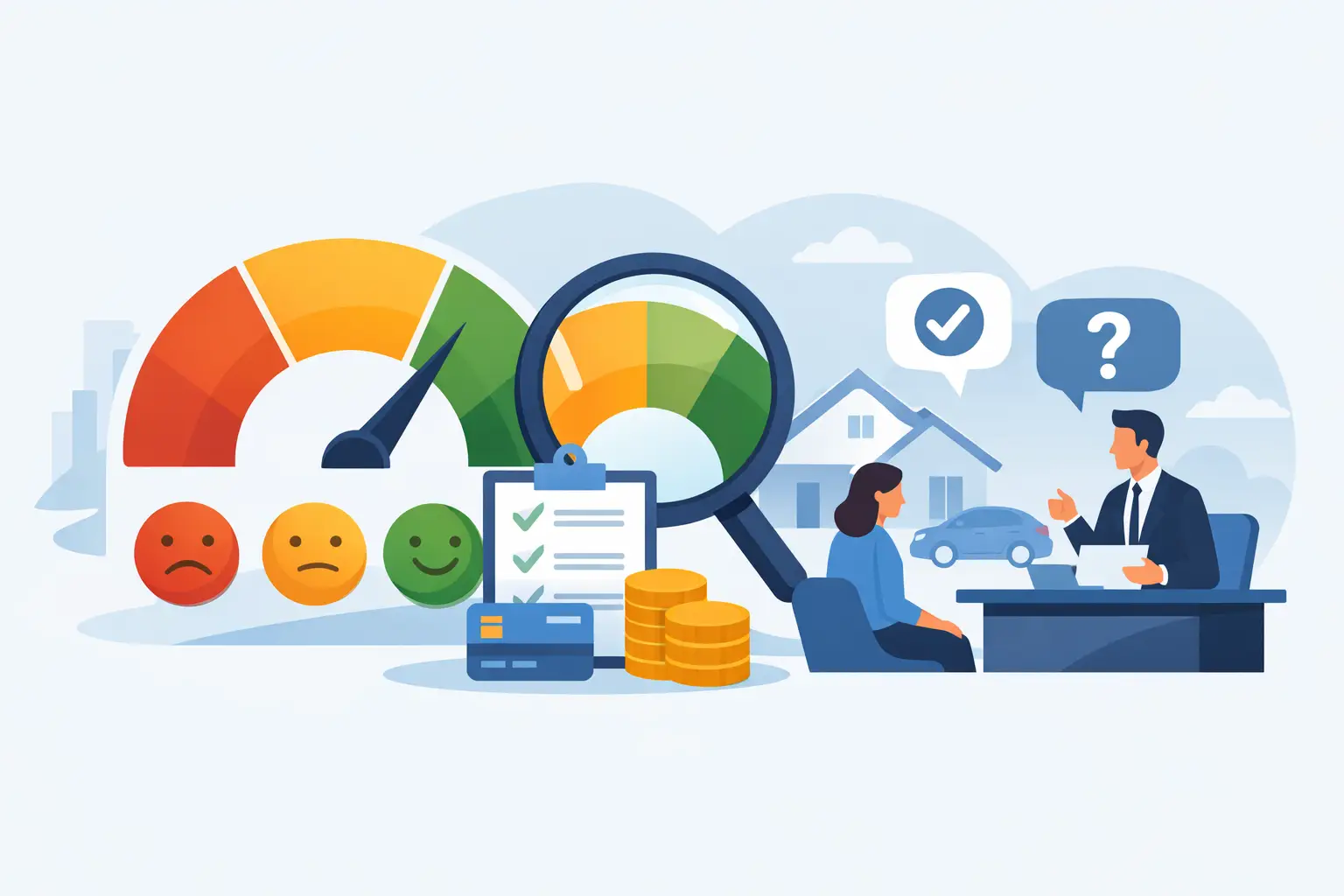
A lot of borrowers ask one urgent question before they apply – what credit score do lenders consider? If you need money fast, that question matters because your score can affect approval, loan amount, rates, and even which lenders will review your request. The short answer is that lenders often look at more than one score, and they rarely rely on that number alone.
That can be good news if your credit is less than perfect. A lower score does not always mean an automatic no. Many lenders also look at your income, current debts, banking history, recent payment behavior, and whether your application makes sense for the loan amount you want.
What credit score do lenders consider most often?
In most consumer lending situations, lenders consider a FICO Score or a VantageScore. Those are the two big scoring models used across the industry. But even that answer needs context, because there is not just one FICO Score and not just one VantageScore.
You can have multiple credit scores at the same time. The score a credit card app uses may not be the same score an auto lender sees. A personal loan lender may use a different bureau, a different score version, or an internal model built on top of standard credit data.
That is why borrowers get confused. You might check a score on your banking app and see 640, then apply somewhere else and hear that the lender used a different number. That does not always mean there is a mistake. It often means the lender pulled a different model or a different credit bureau report.
The three credit bureaus matter too
Lenders usually pull data from Experian, Equifax, or TransUnion. Some pull just one bureau. Others review two or all three. If the information on those reports is slightly different, the scores can be different too.
For example, one bureau may show a recently updated credit card balance while another has not refreshed yet. One may include an old collection account that another bureau does not show. When that happens, your credit score shifts depending on which report the lender uses.
For borrowers trying to move quickly, this means one thing – there is no universal score that every lender sees. There is only the score tied to the report and model that particular lender chooses.
Lenders do not only look at your score
Your credit score is a shortcut. It helps lenders estimate risk fast. But it is not your full financial story.
A lender may still approve a borrower with a lower score if the rest of the file looks stable. That can include steady income, a manageable debt load, recent on-time payments, and a bank account in good standing. On the other side, a borrower with a decent score can still get declined if income is too low, debt is too high, or the application shows signs of stress.
This is especially true with small personal loans and short-term borrowing. Lenders know that many applicants are dealing with urgent expenses, thin credit files, or past setbacks. Because of that, many use broader approval criteria than traditional banks.
What score is considered good enough?
There is no single cutoff that applies everywhere. One lender may consider 620 workable. Another may want 660 or higher. Some lenders market options for bad credit borrowers and review requests from people with scores below that range.
In general, higher scores usually help you qualify for better terms. Lower scores may still qualify, but often with smaller amounts, higher rates, or tighter repayment terms. That is the trade-off.
For personal loans, many borrowers think they need excellent credit to have a chance. That is not always true. Plenty of lenders review applications from fair-credit and bad-credit borrowers. What changes is the pricing, the offer structure, and the level of documentation the lender may want.
Why your income and debt can matter as much as your score
If two applicants both have a 610 score, they may get very different outcomes. One may have stable full-time income, low monthly debt, and no recent missed payments. The other may have maxed-out cards, recent late payments, and inconsistent income. Same score, different risk.
That is why lenders often calculate debt-to-income ratio, or at least review your monthly obligations against your income. They want to know whether the payment looks realistic.
They may also look at credit utilization, which is how much of your available revolving credit you are using. High utilization can signal financial pressure even if your score has not dropped dramatically yet. If your cards are close to maxed out, that can hurt your application.
What hurts your approval odds most
A low score by itself is not always the biggest problem. Recent negative activity usually matters more than old problems.
If your report shows recent late payments, charge-offs, active collections, or multiple hard inquiries in a short period, lenders may see that as a sign that you are scrambling for credit. Bankruptcy, repossession, or default history can also affect the decision, especially if those events are recent.
Thin credit can be a challenge too. If you have very little borrowing history, lenders may not have enough information to assess risk confidently. That does not mean you cannot qualify. It just means the lender may rely more heavily on income, employment, and bank account activity.
How lenders review borrowers with bad credit
Some lenders are built to serve prime borrowers. Others are more flexible and review a wider range of applications. If you are searching because you have bad credit, that distinction matters.
Lenders that work with subprime borrowers often expect lower scores and more credit issues. They may place more weight on whether you are employed, whether you can verify income, and whether your recent banking activity supports repayment. A marketplace like Yup Loans can help by connecting borrowers to participating lenders that may review different kinds of credit profiles, instead of forcing you into one bank’s approval box.
Still, approval is never guaranteed. Flexible lending does not mean risk-free lending. If you are approved with weaker credit, the offer may come with a higher APR or shorter term than a borrower with stronger credit would get.
How to improve your chances before you apply
If you have time to prepare, even a small cleanup can help. Paying down revolving balances may improve utilization fast. Catching up on any past-due accounts can help too, especially if your recent history is the main issue.
It also helps to review your credit reports for errors. Wrong balances, duplicate accounts, or accounts that do not belong to you can drag down a score and create red flags. If your income is strong, make sure the application reflects it clearly and accurately. A clean, consistent application can reduce friction during review.
Try to avoid applying everywhere at once. Multiple applications in a short window can create extra hard inquiries and make you look desperate for credit. When money is tight, that is hard advice to follow, but it can make a difference.
What to expect if your score is low
If your credit score is low, do not assume your only outcome is rejection. A lender may still approve a smaller amount than you requested. They may also offer a different term structure or ask for additional verification.
That is normal. Lenders price for risk. The more uncertainty they see, the more cautious the offer becomes.
This is why the best question is not only what credit score do lenders consider. The better question is what else do they consider with it. Once you understand that, the process makes more sense. Your score opens or narrows doors, but it does not always decide the whole result by itself.
The smartest way to think about your credit score
Treat your credit score as a signal, not a verdict. It tells lenders something useful, but it does not tell them everything. If your score is strong, you may have more options and better pricing. If it is weak, you still may have options, especially if your income and recent financial behavior show stability.
When you need funds quickly, focus on the factors you can control right now. Check your reports, be accurate on your application, borrow only what you need, and review the terms carefully before accepting an offer. The right next step is not waiting for a perfect score. It is understanding how lenders actually evaluate risk so you can apply with clearer expectations and a better shot at approval.
If you are thinking about applying soon, remember this: lenders are looking for a borrower who can reasonably handle the payment, not just a number on a screen.