If you’re working to build a good credit score, you might wonder whether taking out a loan could actually help. It seems counterintuitive – borrowing money to prove you’re financially responsible?
But installment loans can rebuild credit when used properly. Making regular payments shows lenders you can handle debt responsibly, which is exactly what your credit score measures.
How Installment Loans Can Help Improve Your Credit Score
To understand how installment loans affect your credit, you need to know what actually goes into your credit score. It’s not just one thing – it’s a combination of different factors, each weighted differently.
The Five Factors That Determine Your Credit Score
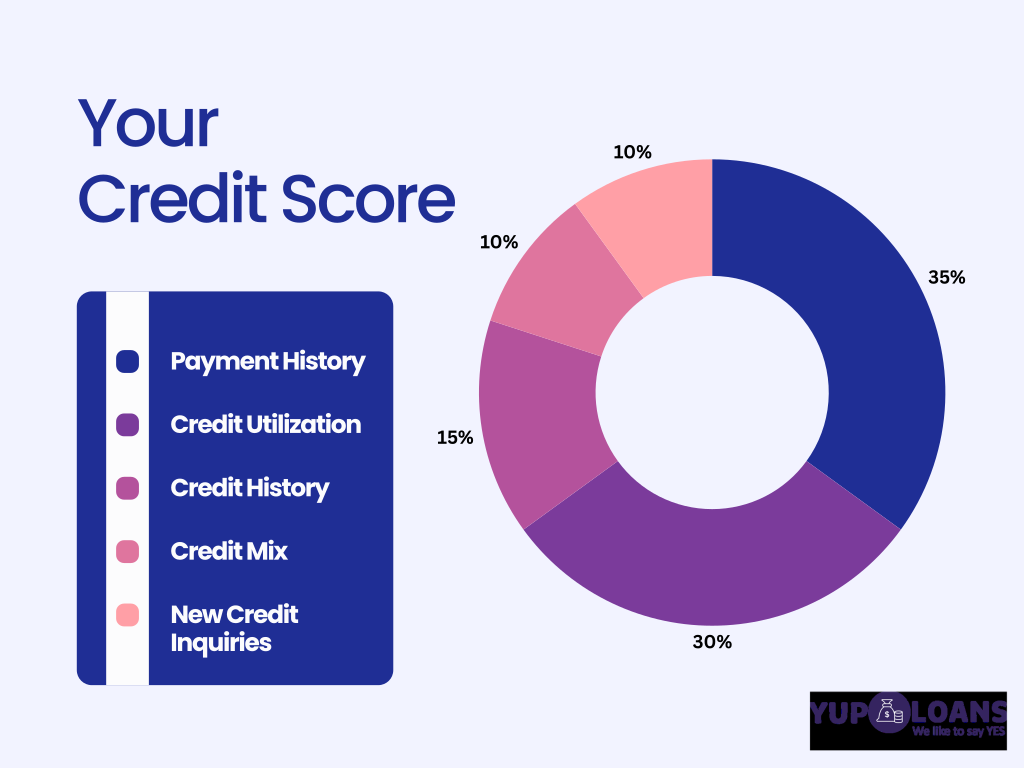
Your credit score is calculated based on five main factors:
Payment history (35%) – Whether you pay your bills on time. This is the biggest factor. Even one missed payment hurts your score, while consistent on-time payments build it back up.
Credit utilization (30%) – How much of your available credit you’re using. This mainly applies to revolving accounts. If you have a $1,000 credit limit and you’re using $900, that’s 90% utilization – too high. Under 30% is better for your credit utilization ratio.
Length of credit history (15%) – How long you’ve had credit accounts. Older accounts help because they show experience managing credit over time.
Credit mix (10%) – The variety of credit types you have. Lenders like to see that you can handle different kinds of debt – credit cards, car loans, personal loans, and mortgages.
New credit inquiries (10%) – How many times you’ve applied for credit recently. Each application creates a “hard inquiry” that can temporarily ding your score.
Where Installment Loans Fit In
Installment loans can positively impact three of these five factors:
- Payment history – Every on-time payment gets reported and proves you’re reliable.
- Credit mix – If you only have credit cards, adding a loan shows you can handle different types of credit.
- Length of credit history – Keeping a loan for its full term adds to your credit history. A two-year loan shows two years of responsible credit management.
Taking out a new loan does mean a hard inquiry on your credit, which can temporarily lower your score by a few points. But if you make your payments on time, the positive impact quickly outweighs that initial dip and can boost your credit score.
Benefits of Using Installment Loans for Credit Rebuilding
Installment loans have some specific advantages when it comes to rebuilding credit. Unlike revolving credit like credit cards, they work differently – and in some cases, that works in your favor.
Predictable Payment Structure
One of the biggest benefits is that you know exactly what you’re paying each month. When you take out the loan, you agree to a fixed payment amount and a clear payoff date.
This makes budgeting easier. You can plan around that $200 monthly car payment or $150 loan payment because it never changes. With revolving accounts, your minimum payment fluctuates based on your balance.
That predictability helps you avoid missed payments. When you know your loan payment is $175 on the 15th every month, you can set aside that money in advance.
Positive Payment History Reporting
When you make an on-time payment on your loan, it gets reported to the three major credit bureaus – Experian, Equifax, and TransUnion. This happens every month for the life of your loan.
If you have a 24-month loan and never miss a payment, that’s 24 instances of positive activity on your file. Over time, those on-time payments start to outweigh past mistakes. This is how installment loans build credit.
Most lenders report to all three bureaus. Some smaller lenders only report to one or two, so it’s worth checking before you borrow.
Credit Mix Improvement
Lenders like to see that you can manage different types of credit. If your file only shows revolving accounts, adding a loan diversifies your profile.
Someone who successfully handles a car loan and revolving credit is less risky than someone who only has one type. It shows you can stick to a payment plan over time, not just make minimum payments when convenient.

Looking for a personal loan for bad credit?
Need cash quickly? With Yup Loans, you can apply for a personal loan in minutes¹ and get matched with lenders ready to help, even if your credit score isn’t perfect.
Request FundsPotential Risks to Consider
Installment loans can help your credit, but they can also backfire if you’re not careful. Before you take one out, understand what could go wrong.
Hard Credit Inquiries
When you apply for an installment loan, the lender runs a hard credit check. This inquiry stays on your credit report for two years and can drop your score by 5 to 10 points.
If you’re applying to multiple lenders to compare rates, those inquiries can add up. The good news is that credit scoring models usually treat multiple inquiries for the same type of loan within a short window (typically 14-45 days) as a single inquiry.
The hit from a hard inquiry is temporary. Within a few months, the impact fades. If you’re making on-time payments, the positive track record will more than make up for that initial dip.
Missed Payment Consequences
If you miss a payment, it gets reported to the credit bureaus just like an on-time payment would – except it tanks your score instead of helping it.
A single 30-day late payment can drop your score by 60 to 110 points, depending on where you’re starting from. That late payment stays on your credit report for seven years.
If you miss multiple payments or let the loan go to collections, the damage gets worse. This is why it’s so important to only borrow what you can actually afford to pay back.
If you do miss a payment, contact your lender immediately. Some will work with you if you’re upfront about financial difficulties.
Debt-to-Income Ratio Concerns
Your debt-to-income ratio (DTI) measures how much of your monthly income goes toward debt payments. Lenders look at this when deciding whether to approve you for new credit.
If you take out an installment loan, that monthly payment gets added to your DTI. If you’re already carrying other debt, adding another payment could push your DTI too high. Most lenders want to see a DTI below 43%, though some prefer under 36%.
A high DTI doesn’t directly hurt your credit score, but it makes it harder to get approved for other loans in the future. It also increases the risk that you’ll struggle to make payments if something unexpected happens.
Only take on debt you can comfortably manage alongside your other financial obligations.
Types of Installment Loans for Credit Building
- Personal loans are straightforward – you borrow a lump sum and pay it back over 1 to 7 years. You can use the money for almost anything, and interest rates depend on your credit score.
- Credit-builder loans are designed specifically for building credit. The lender holds the money in a savings account while you make payments. Once you’ve paid it off, you get the money. It’s a forced savings plan that builds payment history. Amounts are usually small – $300 to $1,000.
- Auto loans can help if you actually need a car. They’re secured by the vehicle, so lenders are more willing to approve people with lower scores. Just watch out for predatory dealerships that charge excessive interest.
- Student loans count toward your credit mix if you have them, but don’t take out student debt just to build credit.
Best Practices for Rebuilding Credit with Installment Loans
Taking out a loan is only half the battle. How you manage it determines whether it helps or hurts. These tips work whether you’re using installment loans for bad credit or just trying to build your credit from scratch.
Choose Loans You Can Actually Afford
Before you borrow, look at your monthly income and expenses. What can you realistically afford to pay each month without skipping other bills or dipping into savings?
Work out your existing debt payments, rent or mortgage, utilities, groceries, insurance, and transportation costs. Then add some cushion for unexpected expenses – car repairs, medical bills, or income changes. If the loan payment doesn’t fit comfortably into what’s left, don’t take it.
Having an emergency fund makes a difference too. Even a small buffer of $500 to $1,000 can keep you from missing loan payments when something unexpected comes up.
Make Every Payment On Time
This is the most important rule. How you pay your bills is 35% of your credit score, and even one late payment can undo months of progress and negatively impact your credit score.
Set up automatic payments if your lender allows it. The money comes out of your account on the due date without you having to remember. Just make sure you have enough in your account to cover it.
If you prefer manual payments, set reminders a few days before the due date. Don’t wait until the last minute – give yourself a buffer in case there’s a processing delay, or you need to transfer money between accounts.
Keep Loan Balances Manageable
Only borrow what you actually need. Taking out a $5,000 personal loan when $2,000 would cover your expenses just creates unnecessary debt and higher monthly payments.
Smaller loans are easier to manage and less risky if your financial situation changes. They also keep your debt-to-income ratio lower, which helps when you apply for other credit down the road.
Monitor Your Credit Progress
Check your file regularly to make sure your payments are being reported correctly. You can get a free credit report from each of the three bureaus once a year at AnnualCreditReport.com.
Many companies and financial apps also offer free credit score tracking. Watch your score over time to see if it’s moving in the right direction. If it’s not improving after several months of on-time payments, something might be off.
If your strategy isn’t working, adjust it. Maybe you need to pay down balances along with your loan. Maybe you need to dispute errors on your file.
Take Out an Installment Loan to Build Credit Today!
Rebuilding credit takes time, but an installment loan can speed up the process when you use it right. The key is choosing a loan you can afford and making every single payment on time.
At Yup Loans, we work with borrowers across different credit profiles – whether you’re recovering from past mistakes or building credit from scratch, we can help you find loan options that fit your situation³.
Ready to start rebuilding? Request funds today and take the first step toward better credit.